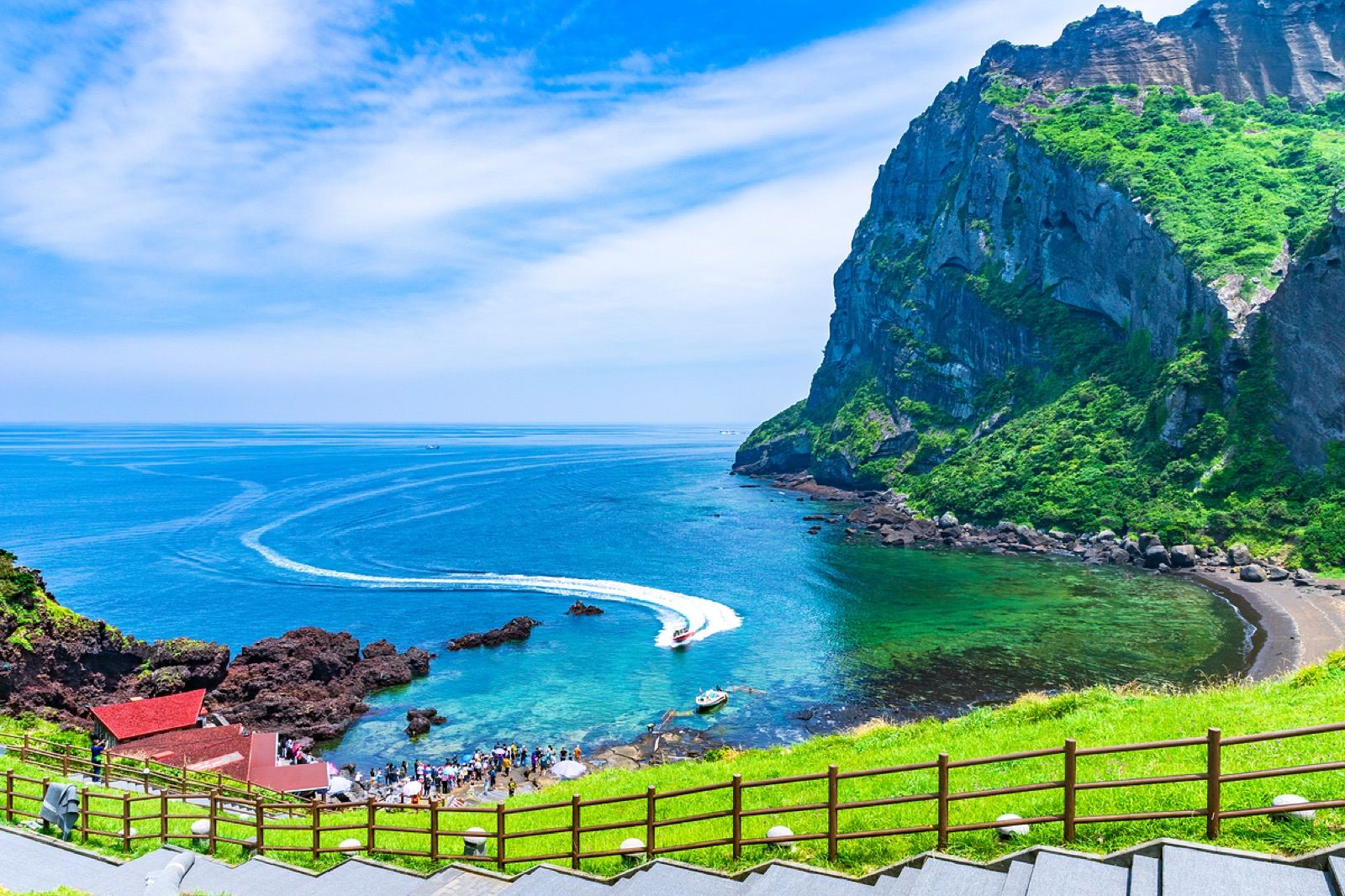
Seongsan Ilchulbong is a 180-meter volcanic crater on Jeju's east coast, and the short climb to its rim gives you one of the finest sunrise views in Korea. It's a UNESCO World Heritage site, the "Sunrise Peak" the name promises, and for once the tourist-brochure hype holds up. The walk is steep but quick, and if you time it right the payoff is huge. Here's how to do it without the crowds swallowing the moment.
What is Seongsan Ilchulbong?
It's a tuff cone — a bowl-shaped crater formed by a shallow underwater eruption about 5,000 years ago, now grassed over and rising straight out of the sea on Jeju's eastern tip. From a distance it looks like a giant green fortress. The crater rim is the goal, and the eastern position is why it's the sunrise spot on the island.
Jeju itself is Korea's big volcanic holiday island off the south coast, and this is its single most recognizable landmark.
The climb
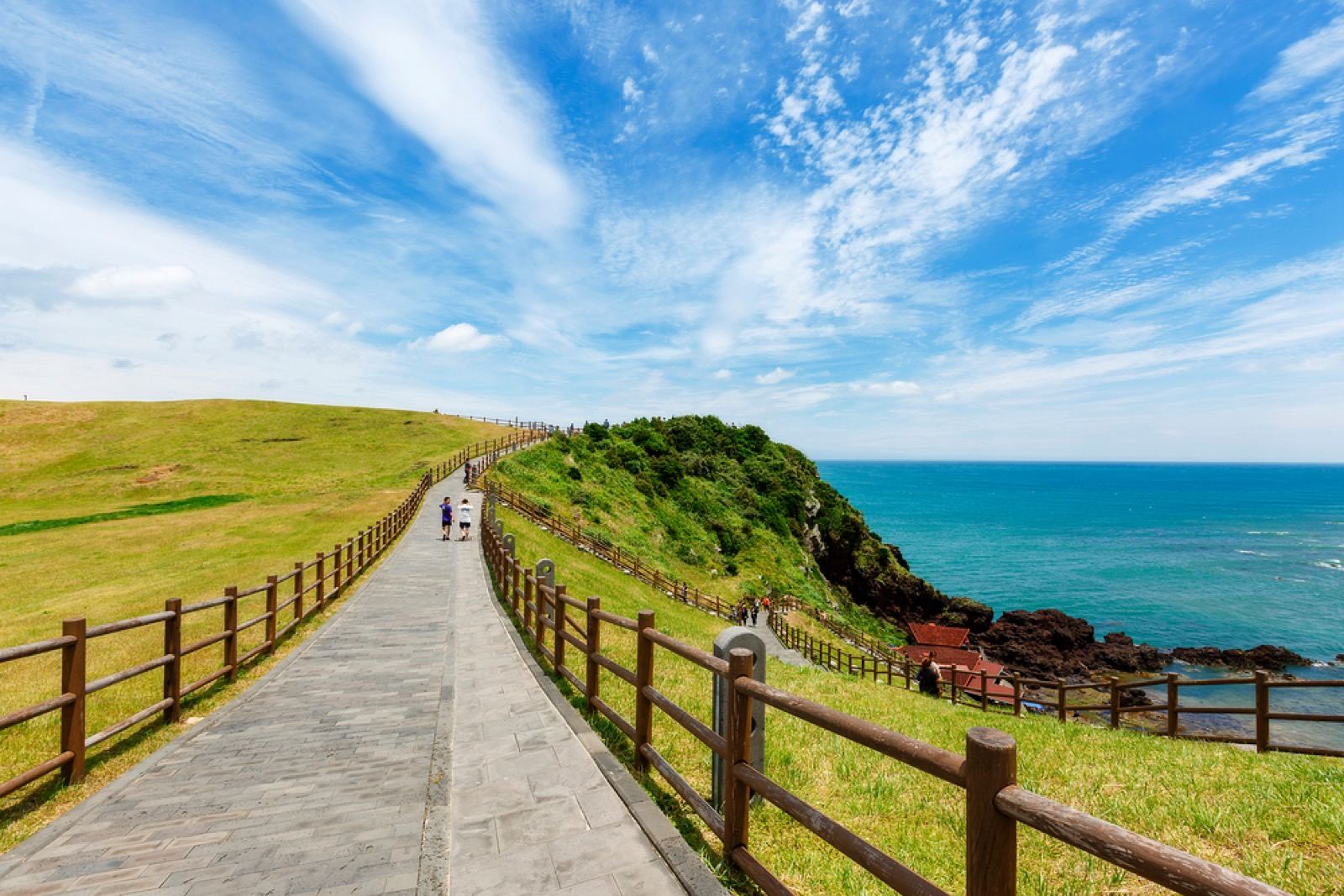
Short and steep. The trail to the rim is a well-built staircase, and it takes about 20 to 30 minutes up at a normal pace. It's a genuine cardio climb, not a stroll, so wear real shoes and take the handrails on windy days.
- At the top, a viewing platform looks down into the grassy crater and out over the coastline and Udo island offshore.
- Entry is a small fee (around 5,000 won, as of 2026 — check the current rate) and the gate opens early for sunrise; confirm the seasonal opening time the day before, since it shifts with the sunrise.
- It's exposed up there. Bring a windbreaker even in summer.
When should you go?
Sunrise, if you can drag yourself out of bed — that's the whole point of the place, and the light on the crater and the sea is the reason to come. Failing that, early morning beats midday, when tour buses pack the staircase.
- Sunrise: the marquee experience. Check the exact time and gate opening for your date.
- Late afternoon: quieter, softer light, no 5 a.m. alarm. A fair trade if sunrise isn't happening.
- Avoid midday in peak season unless queues don't bother you.
If you only see one sunrise in Korea, this is a strong candidate. Stay overnight nearby in Seongsan town so you're at the gate when it opens, rather than driving across the island in the dark.
What else is right there
Seongsan makes an easy half-day when you pair it with the coast around it:
- Haenyeo divers — Jeju's famous free-diving women, many now in their 60s and 70s, give demonstrations near the base. Real cultural heritage, not a staged show.
- Udo island — a short ferry from nearby Seongsan port reaches this flat little island of stone walls, beaches and peanut ice cream. An easy add-on if you've got the day.
- Gwangchigi Beach — just west, with black volcanic rock and a clean view back at the crater. Good for photos without the climb.
What to eat nearby
You're on Jeju, so eat like it:
- Heukdwaeji (black pork) — Jeju's prized black-skinned pig, grilled at the table. The island's signature meal.
- Haemul (fresh seafood) — abalone, cutlassfish and sea urchin come straight off the local boats; the haenyeo culture runs deep here.
- Hallabong — the sweet, easy-peel Jeju citrus, sold everywhere as fruit, juice and every dessert imaginable.
How to do it
- Base in Seongsan the night before so you can walk to the gate for sunrise.
- Check the gate's opening time and the sunrise time for your exact date — both move through the year.
- Wear proper shoes and a windbreaker; the stairs are steep and the rim is windy.
- Add Udo or the haenyeo divers to round the morning into a half-day.
- Getting to Jeju: fly into Jeju International Airport (one of the busiest routes in the world, so flights are frequent and cheap), then rent a car or take the east-coast bus, roughly an hour to Seongsan.
Jeju rewards having your transfers and any island activities sorted before you land, especially in peak season when cars and tours sell out.
Set the alarm, climb the stairs, and let the sun come up over the crater. It's the kind of thing you plan a Jeju trip around, and Seongsan earns it.