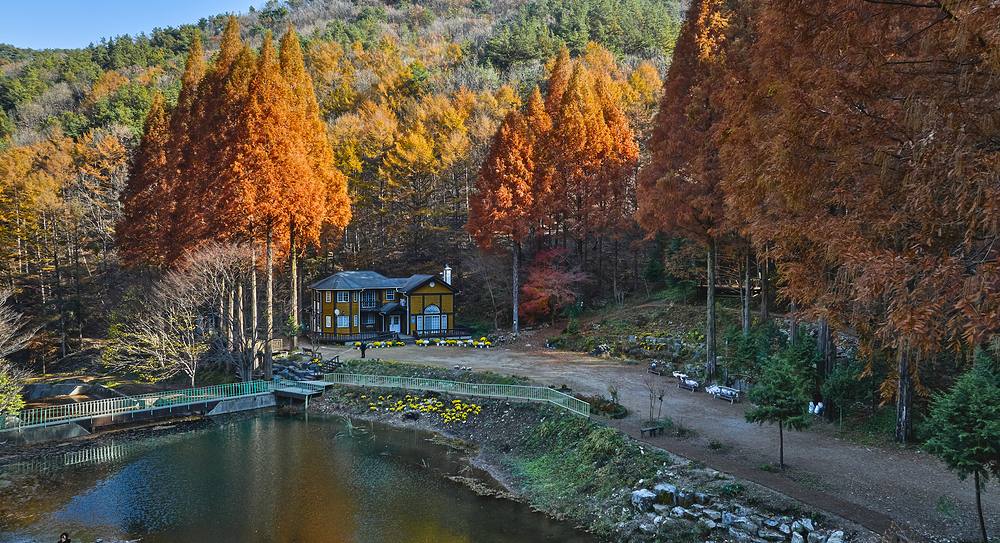
Korea has a nationwide network of recreation forests (자연휴양림, jayeon hyuyangnim): protected woodlands with cabins, trails and clean mountain air, run mostly by the Korea Forest Service and local governments. Koreans book them out months ahead for weekends and holidays; foreign travelers almost never hear about them. For the right traveler they're one of the best-value nature escapes in the country, a night under the trees for the price of a cheap motel.
Most of Korea is mountains and forest, and recreation forests are how locals actually get into it. Not a day-trip photo stop, but a place to sleep, cook, walk and slow down for a night or two.
What a recreation forest actually is
It's a public forest park where you can stay overnight. Inside a typical one you'll find:
- Cabins and forest lodges, from simple two-person rooms to family units with a kitchen and heated ondol floors.
- Forest-bathing and hiking trails, both gentle wooded loops and longer mountain climbs.
- Campsites and timber deck sites for tents.
- Streams, valleys and forest-education centers, plus properly cool air in summer at the higher-elevation sites.
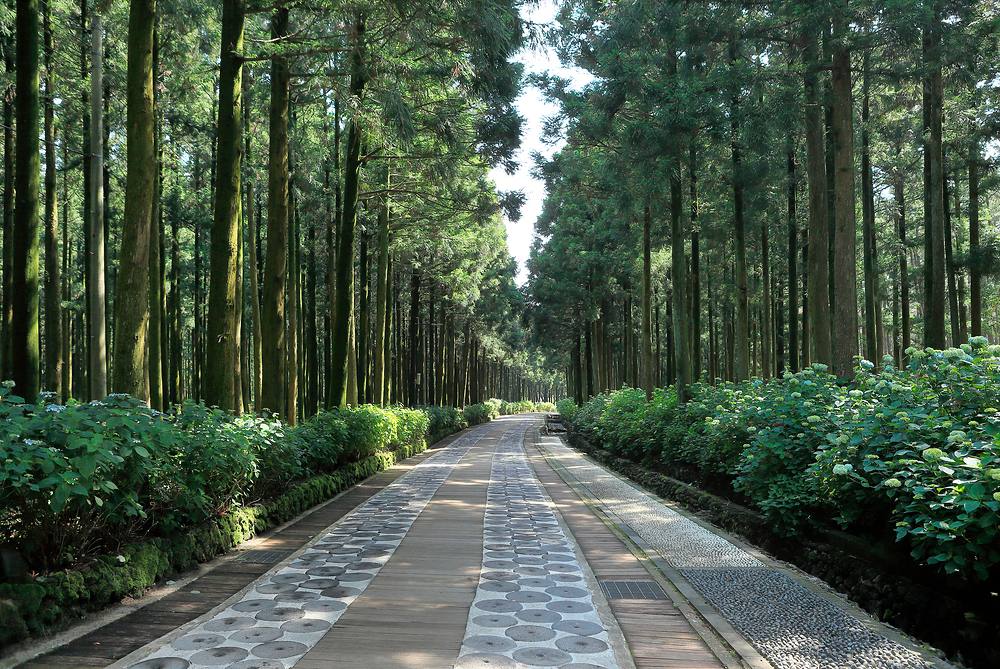
They come in three tiers: national (국립), run by the Korea Forest Service and generally the most established; public/provincial (공립), run by local governments; and private (사립). National forests tend to have the best facilities and, predictably, the fiercest competition for weekend cabins.
Why Koreans love them (and why you might too)
The appeal starts with price: a cabin is modest but remarkably cheap for what you get, often a fraction of a hotel. Mountain forests are the classic escape from Korea's humid city summers, and they turn spectacular during the fall-foliage weeks. Beyond that, it's simply a restful place to be, built around slow mornings, birdsong, stream sounds and trails rather than nightlife. Many forests are designed specifically around sanlim-yok, or forest bathing, as a health practice. This is where Korean families actually spend their long weekends.
The honest catch: booking is hard for foreigners
Here's the part no one warns you about. The main reservation system for public forests, the 숲나들e / Foreest portal, is Korean-language and reservation-only, and the most popular national forests are genuinely hard to book. Weekend and peak-season cabins are released on a fixed schedule and gone within minutes, sometimes allocated by lottery. As of 2026, planning a trip around a specific national forest on a specific weekend usually takes some Korean, a Korean friend, or real flexibility on dates.
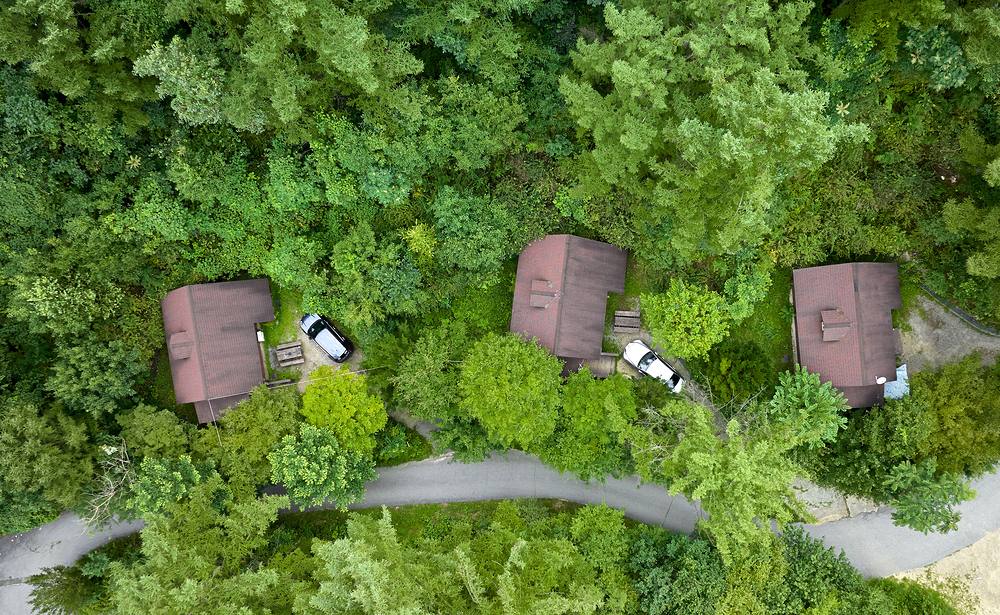
The workaround: private recreation forests and mountain pensions (guesthouses) are far easier to book directly, often in English through the usual booking sites, and they deliver almost the same experience. Rules and availability change, so check the current process before you build a trip around one specific forest.
How to make it work
- Go midweek. Weekday cabins are far easier to get than weekend ones, and quieter.
- Aim for shoulder seasons. Late spring and autumn are gorgeous and a little less contested than peak summer or the foliage weekends.
- Have a backup. If the national forest you want is full, a nearby private forest or mountain pension gets you the same trees and trails.
- Pair it with a region you're already visiting. Many forests sit within an hour or two of places you'll pass anyway.
Forests to know, near the south
You don't have to detour across the country. Several well-regarded forests sit close to the regions most travelers already reach beyond Seoul:
- Jirisan area (near Hadong and Gurye): deep valleys on Korea's grandest mainland massif.
- Namhae pine and cypress forests: fragrant coastal woodland on the south coast.
- Gayasan (near Haeinsa temple): mountain forest paired neatly with a UNESCO temple.
- Daegwallyeong (near Gangneung): high, cool ridgeline forest on the east side.
Names and operators vary, so confirm the exact forest, its facilities and its booking method before committing.
What to bring
- Food and basics. Many cabins have a kitchenette but no shop nearby, so stock up in town first.
- Layers. Mountain nights are cold even in summer.
- Slip-on shoes and a towel. Rooms are ondol-floor, and some sites have shared facilities.
- Cash, for the smaller and more remote forests.
An easier way to try it
If the Korean-only system feels like too much for a short trip, you can still get the forest-cabin feeling without the scramble. Book a private recreation forest or mountain pension directly, or join a guided nature day trip from a nearby city for the trails and mountain air with none of the booking headache. Save the famous national forests for a return visit, ideally midweek or with a Korean-speaking friend.
Find nature day trips & mountain experiences
Who it's for
Recreation forests are for travelers who want a quiet night under the trees, a hot-spring town nearby and morning walks in the mist as part of their Korea trip. If you need international-brand hotels and easy English at every turn, start with a private forest or a mountain pension instead. Either way, it takes more effort than booking a hotel, and that friction is why so few foreign travelers ever see this side of the country.