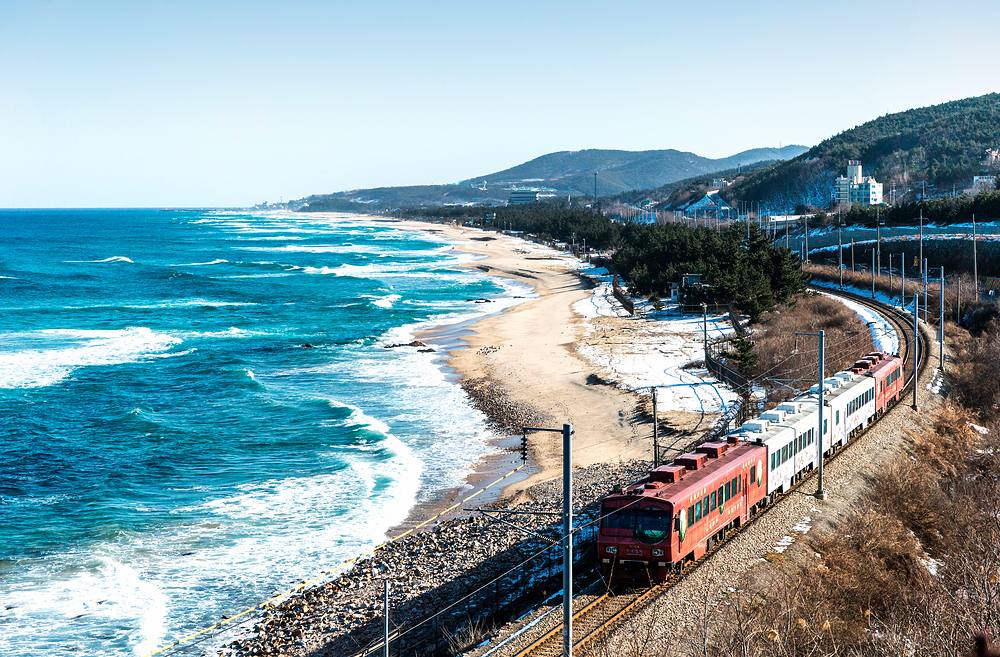
Beyond the KTX, Korea runs a small fleet of scenic tourist trains built to slow down and show off the landscape rather than blitz past it. Koreans ride them for the views alone, sometimes as a round-trip day out with no real destination in mind. Most foreign visitors never hear about them. If you like train travel, this is one of the country's most underrated experiences, and it costs a fraction of what a marquee scenic railway runs elsewhere.
What makes them special
These aren't commuter trains. They're built for looking out the window, with panoramic glazing, open-air observation cars, themed interiors, and routes chosen for scenery rather than speed. Depending on the service you might find a cafe car, a foot-spa car, heated floor seating, or a family play area. The classic routes wind through the Baekdudaegan mountains, the rugged spine of the peninsula, or hug the East Sea coastline, where the track runs close enough to the water that the waves seem to reach the windows.
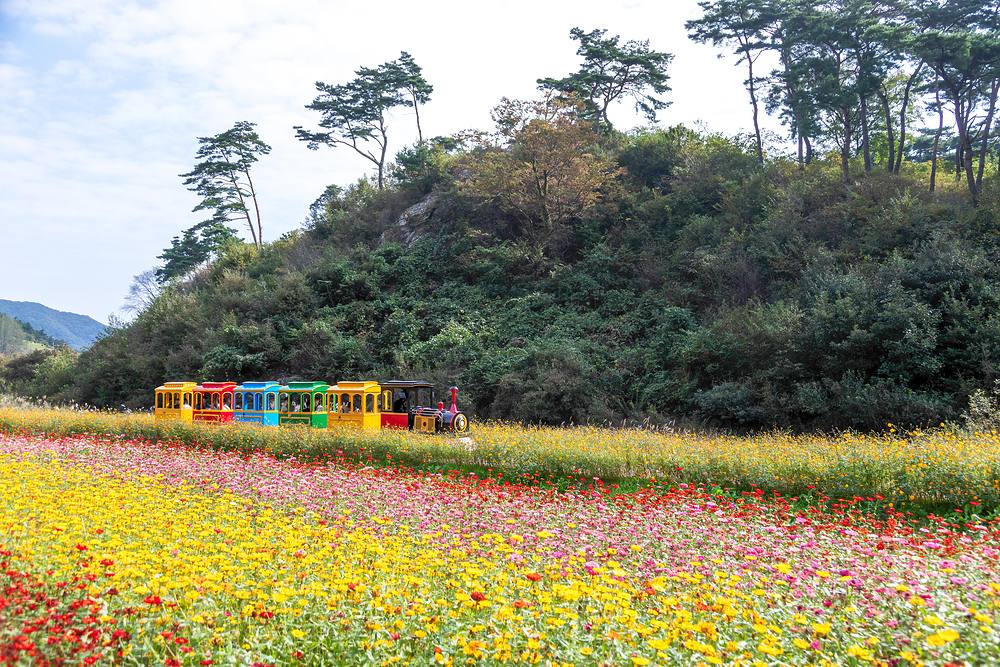
The kinds of trains to know
Names, routes and schedules change over time, so confirm current operation and booking on Korail's official channels before you plan. These are the categories worth chasing:
- Mountain-valley trains through the rugged interior, with open observation cars for the gorges, tunnels and forests. Ride one in autumn and the foliage does the rest.
- Coastal "sea trains" along the East Coast, where seats are turned to face the water and the line threads between the mountains and the sea.
- Themed heritage and "slow" trains built around a region's character, with leisurely services, local food, craft stops and old-fashioned carriages.
- Cross-country sightseeing trains that string several scenic stretches into a full day out.
Why foreigners miss them (and shouldn't)
They're marketed mostly in Korean, so they rarely surface in English-language trip planning. They're also not built for efficiency, which means speed-focused itineraries skip them, and they often leave from smaller regional hubs you'd only reach if you knew to look. The payoff is a few hours of spectacular scenery at a relaxed pace, for a modest fare, mostly among Korean travelers rather than tour groups.
How to fit one into your trip
- Pick the region first. Heading to the east coast around Gangneung? Look for a coastal route. Going inland? Look for a mountain-valley train.
- Book ahead in peak seasons. Autumn-foliage weekends are the busiest by far, and the best cars sell out.
- Check the start point. Some services leave from regional stations, so pair them with a KTX leg to reach the hub.
- Go one-way if you can. Ride the scenic route in the prettier direction, then take a faster train or bus back to save time.
- Grab a window seat and a coffee. That's the whole plan, and it's enough.
Pair it with a coastal base
The east coast is the easiest place to build a scenic-rail day into a wider trip. Base yourself in Gangneung, under two hours from Seoul by KTX, and you're set up for sunrise beaches, Anmok's coffee street, and a coastal train ride in the same visit.
Who it's for
This is for travelers whose idea of a good day is a window seat, a warm drink, and mountains or sea rolling steadily by, rather than another checklist of sights. Reaching the departure hubs is easy on the regular rail network, and a rail pass can cover the connecting KTX legs.