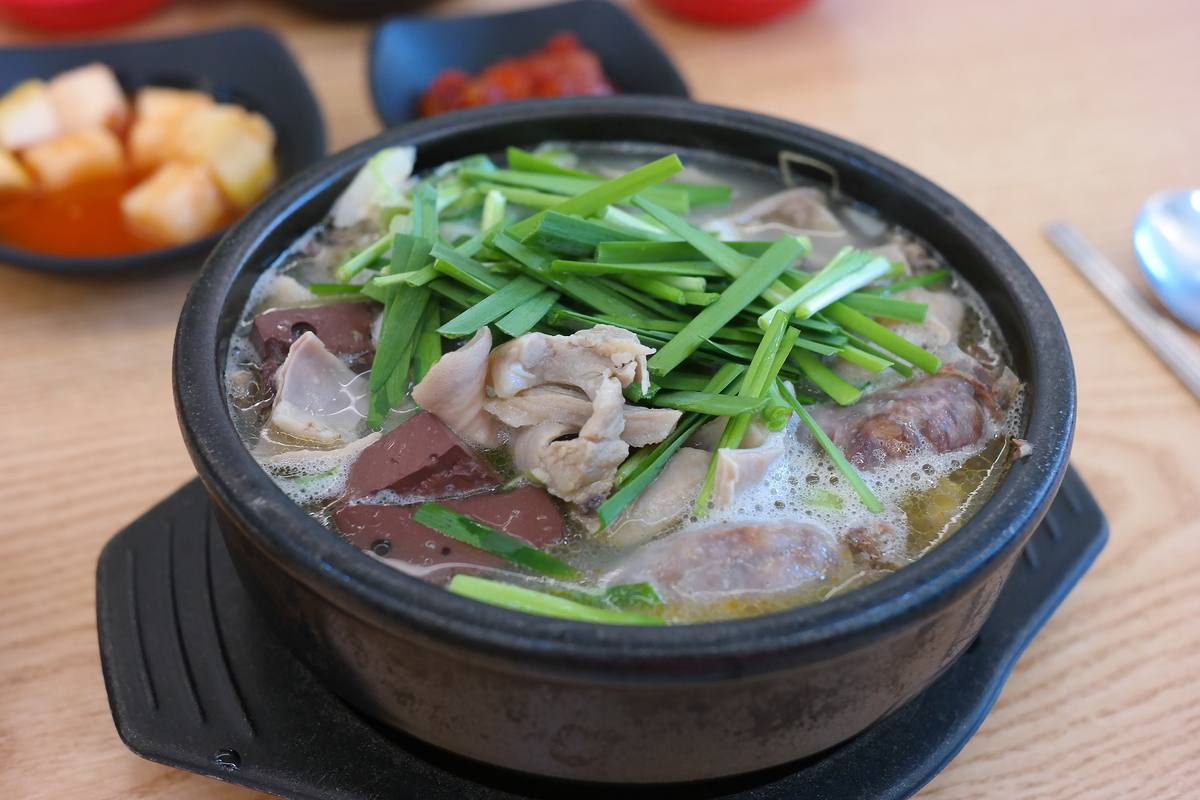
The best food in Busan is coastal, bold, and a little rougher around the edges than Seoul's. Start with dwaeji gukbap (pork soup rice), milmyeon (cold wheat noodles), ssiat hotteok (seed-stuffed pancake), raw fish at Jagalchi Market, and eomuk (fish cake). Most dishes cost 5,000–15,000 won, and the best places are around Nampo-dong, Jagalchi, and Seomyeon.
Busan food is its own thing. Korea's second city sits right on the sea, took in waves of war refugees in the 1950s, and built a food culture that's cheaper, saltier, and more seafood-forward than the capital's. If you're wondering what to eat in Busan, the honest answer is: the stuff you can't get done this well anywhere else. This guide covers the 12 dishes worth prioritizing, the exact markets and neighborhoods to find them, roughly what each costs as of 2026, and how to order when you don't speak Korean.
We've organized it so you can eat your way through a two- or three-day trip without missing the essentials — and without wasting a meal on something you could get better in Seoul.
The 12 Busan foods at a glance
| Dish | Type | Where to try | Price (approx) |
|---|---|---|---|
| Dwaeji gukbap | Pork soup rice | Seomyeon gukbap alley | 9,000–11,000 ₩ |
| Milmyeon | Cold wheat noodles | Citywide, Gaya | 7,000–9,000 ₩ |
| Ssiat hotteok | Street pancake | BIFF Square, Nampo | 2,000 ₩ |
| Eomuk | Fish cake | Everywhere; Samjin | 1,000–4,000 ₩ |
| Hoe (raw fish) | Sashimi | Jagalchi Market | 30,000 ₩+ (share) |
| Dongnae pajeon | Seafood pancake | Dongnae | 15,000–25,000 ₩ |
| Jogae-gui | Grilled shellfish | Gwangalli, Millak | 30,000 ₩+ (share) |
| Ganjang gejang | Soy-marinated crab | Citywide | 30,000 ₩+ |
| Jangeo-gui | Grilled eel | Gijang, Haeundae | 25,000 ₩+ |
| Nakji-bokkeum | Spicy octopus | Citywide | 12,000–16,000 ₩ |
| Bingsu | Shaved-ice dessert | Cafés citywide | 8,000–15,000 ₩ |
| Wan-jatang / amso | Late-night soup | Pojangmacha | 10,000 ₩+ |
Now the detail — what each dish is, why it's a Busan thing, and where to get it right.
1. Dwaeji gukbap (pork soup rice)
If you eat one thing in Busan, make it dwaeji gukbap. It's a milky pork-bone broth poured over rice (or served with rice on the side), seasoned at the table with salted shrimp (saeujeot), chives, and a chili paste. Rich, restorative, and open nearly around the clock, it's the dish Busan runs on — born from the lean post-war years when every scrap of the pig went into the pot.
- Where: Seomyeon has an entire dwaeji gukbap alley (돼지국밥 골목) packed with specialists, many open 24 hours. Look for places with a steamy window and a queue of locals.
- Price: around 9,000–11,000 won as of 2026.
- Order it: point and say "dwaeji gukbap hana" (one pork soup rice). Season gradually — add the shrimp and chili a little at a time and taste.
Busan takes its gukbap seriously enough to argue about it. Some shops do a clear broth, others milky; some serve the rice in the soup (gukbap), others on the side (ttaro gukbap). There's no wrong answer — just order what the table next to you is having.
2. Milmyeon (cold wheat noodles)
Milmyeon is Busan's own invention — chewy cold wheat noodles in an icy, slightly sweet-and-sour broth, topped with sliced beef, cucumber, and half a boiled egg. It came out of the same refugee kitchens that gave the mainland naengmyeon: when buckwheat ran short, cooks used wheat flour instead, and a Busan staple was born.
- Where: everywhere in summer; the Gaya and Seomyeon areas have famous long-runners.
- Price: around 7,000–9,000 won.
- Styles: mul-milmyeon (in broth) is the classic; bibim-milmyeon comes in a spicy sauce with a splash of broth on the side.
It's the perfect foil to all that rich pork — order a bowl to share after gukbap or barbecue.
3. Ssiat hotteok (seed-stuffed pancake)
The Busan upgrade to Korea's favorite street snack. A regular hotteok is a fried pancake filled with molten brown sugar; the Busan version slits it open and stuffs it with a handful of seeds and nuts (ssiat). Crunchy, gooey, and addictive for pocket change.
- Where: the stalls at BIFF Square in Nampo-dong are the originals and still the best. Expect a line; it moves fast.
- Price: about 2,000 won each.
- Tip: eat it immediately, carefully — the sugar inside is molten.
4. Eomuk (Busan fish cake)
Busan is Korea's fish-cake capital, and eomuk here is a world away from the rubbery stuff elsewhere. Grab skewers hot from a street cart in winter, drink the free anchovy broth from a paper cup, or visit one of the modern fish-cake bakeries near Busan Station that turn it into croquettes and baguettes.
- Where: street carts citywide; Samjin Eomuk (the century-old original) has a flagship in Yeongdo and a bakery at Busan Station.
- Price: 1,000 won a skewer on the street; 2,000–4,000 won for the fancy bakery versions.
5. Hoe (raw fish) at Jagalchi Market
No Busan food guide is complete without Jagalchi, Korea's largest seafood market. The move is simple and theatrical: pick your live fish from the vendors downstairs, pay by weight, and carry it upstairs where a restaurant slices it into hoe (sashimi) and serves it with sides and a spicy maeuntang fish stew made from the bones.
- Where: Jagalchi Market in Nampo-dong, right on the water.
- Price: varies a lot by fish and season — budget 30,000 won and up for a plate to share between two.
- Tip: agree on the price before they start cutting. Go at lunch for the liveliest atmosphere.
6. Dongnae pajeon (seafood scallion pancake)
A thick, chewy pancake of scallions and seafood that's historically a Dongnae-district specialty — once refined enough to be served to royalty. It's heartier and more substantial than the thin pajeon you'll find elsewhere, loaded with shrimp, squid, and oysters.
- Where: the Dongnae area has the old specialists.
- Price: 15,000–25,000 won for a shareable pancake.
- Pair it: with a bowl of makgeolli (rice wine). That's the traditional, correct combination.
7. Jogae-gui (grilled shellfish)
Busan's great group-dinner-and-drinks meal. You sit around a grill loaded with clams, scallops, mussels, and other shellfish, cook them yourself, and work through soju as you go. It's loud, social, and best with a sea view.
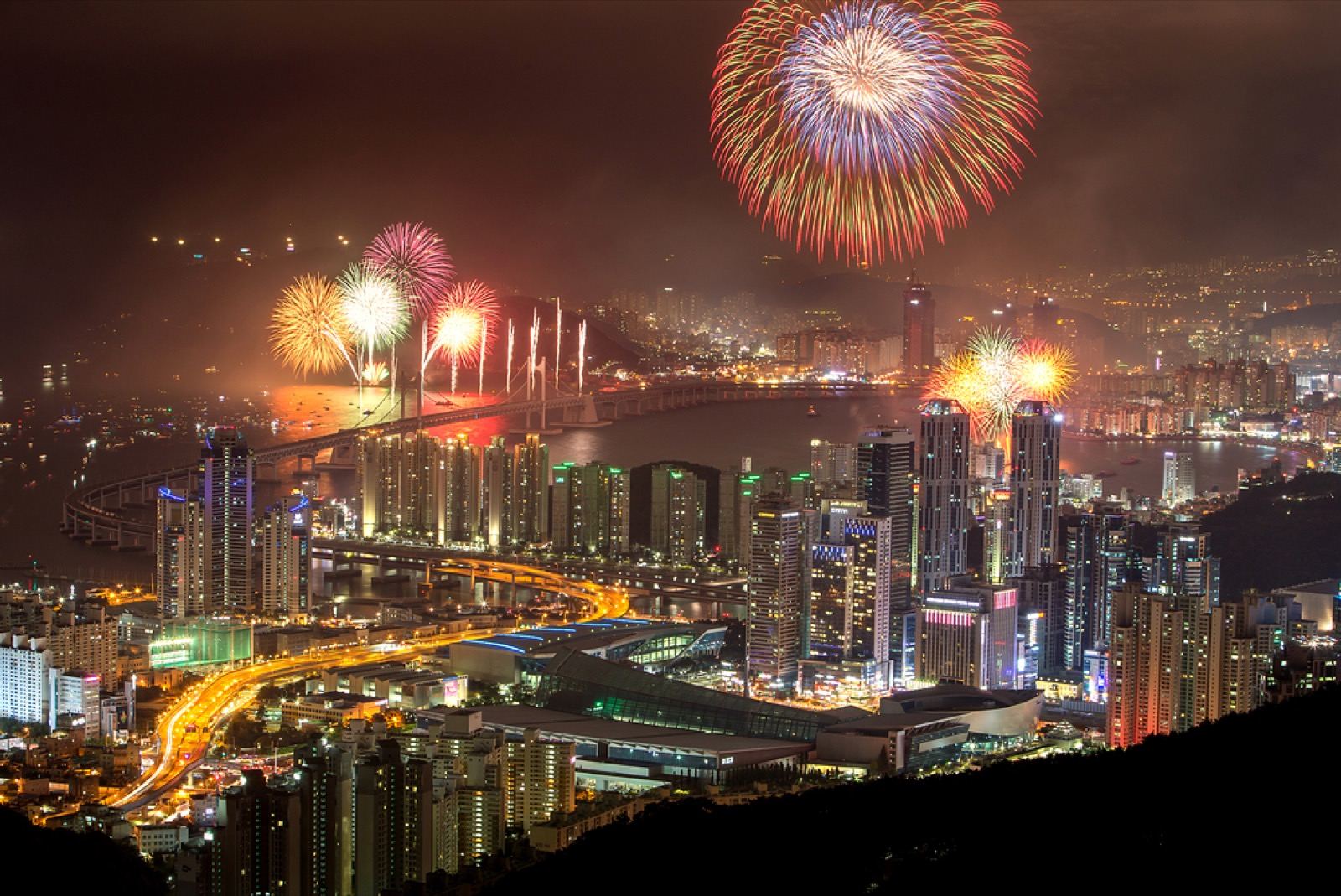
- Where: the shellfish tents along Gwangalli and Millak Raw Fish Town, especially lit up at night under Gwangan Bridge.
- Price: 30,000 won and up for a shared set; prices scale with the seafood.
- Best time: evening, when the bridge lights come on.
8. Ganjang gejang (soy-marinated raw crab)
"Rice thief" is the nickname — this is raw crab marinated in soy sauce until the flesh goes silky and the roe turns rich and custardy, and it makes you eat bowl after bowl of rice. It's an acquired taste for some, a religion for others, and Busan's coastal crabs are prime.
- Where: specialist gejang restaurants citywide.
- Price: 30,000 won and up; a splurge, but worth doing once.
- How: suck the meat and roe straight from the shell, mix the roe with rice. Messy and glorious.
9. Jangeo-gui (grilled eel)
Freshwater and sea eel, grilled over charcoal and brushed with a sweet-savory glaze — a stamina food Koreans eat to beat the summer heat. The coastal town of Gijang, just outside Busan, is famous for its eel and its anchovies.
- Where: Gijang's eel restaurants, and spots around Haeundae.
- Price: 25,000 won and up per person.
- Tip: wrap pieces in perilla leaf with a little ginger.
10. Nakji-bokkeum (spicy stir-fried octopus)
For the chili lovers. Small octopus stir-fried in a fierce gochujang sauce with vegetables — fast, fiery, and often served over rice or with noodles to cut the heat. Busan's seafood supply makes it especially good here.
- Where: everywhere; market food courts do great cheap versions.
- Price: 12,000–16,000 won.
- Cool it down: order a side of steamed egg (gyeranjjim) or a cold milmyeon.
11. Bingsu (shaved-ice dessert)
The reward after all that salt and spice. Mountains of fine shaved ice with red bean, condensed milk, fruit, or increasingly elaborate toppings. Busan's café scene — especially around Jeonpo Café Street in Seomyeon and the beaches — does excellent, Instagram-ready versions.
- Where: cafés citywide; Jeonpo and Haeundae for the trendy ones.
- Price: 8,000–15,000 won (built to share).
- When: peak summer, obviously, but you'll find it year-round.
12. Pojangmacha late-night food
The city doesn't stop eating after dark. Busan's pojangmacha (orange-tented street bars) serve grilled intestines, egg rolls, spicy chicken feet, and hot soups well into the night, washed down with soju. It's the real, rowdy, late-night Busan experience.
- Where: tent clusters around Seomyeon, Nampo, and Gwangalli.
- Price: dishes from around 10,000 won; it adds up with drinks.
- Etiquette: sit, point at what others are having, and don't be shy.
Where to eat in Busan, by neighborhood
Not sure where to base your eating? Here's the short version:
- Nampo-dong & Jagalchi — the old downtown and the seafood market. Ssiat hotteok at BIFF Square, raw fish and maeuntang at Jagalchi, street food everywhere. Start here.
- Seomyeon — the city's buzzing center. Dwaeji gukbap alley, Jeonpo Café Street for bingsu and coffee, pojangmacha at night.
- Haeundae & Gwangalli — the beaches. Grilled shellfish tents, eel, and sea-view dinners; Gwangalli is livelier after dark.
- Dongnae — for the old-school pajeon and a more traditional feel.
- Gijang — a short trip out for eel, anchovies, and a big seaside market.
Busan's food markets worth a wander
Markets are where Busan food lives. Beyond Jagalchi (seafood), hit Gukje Market and BIFF Square in Nampo for street food, Bupyeong Kkangtong Market (a lively night market with international stalls), and the fish-cake and seafood stalls scattered through all of them. Grazing a market is cheaper and more fun than a sit-down meal, and it's the best way to try a lot in one go.
How to order food in Busan without Korean
It's easier than you'd think:
- Point and hold up fingers for quantity — it works everywhere, especially at markets and street stalls.
- Photo menus and English menus are common in tourist areas (Nampo, Haeundae); less so in local gukbap shops, where pointing at a neighbor's bowl is a perfectly good order.
- Pay by card almost everywhere, though a few old market stalls are cash-only — carry some won. (See our guide on how to pay in Korea.)
- Translation apps (Papago is better than Google for Korean) handle anything tricky.
- Tipping isn't a thing — the price on the menu is what you pay.
What does eating in Busan cost?
Busan is kind to a food budget. A bowl of gukbap or milmyeon runs 7,000–11,000 won, street snacks are 1,000–3,000 won, and even a seafood or barbecue spread shared between two usually lands under 20,000 won a head. The splurges — raw fish, marinated crab, grilled shellfish with drinks — can climb past 30,000 won per person, but you can eat extremely well here for very little if you lean on markets and gukbap.
When to eat what
- Summer: milmyeon, bingsu, grilled eel (the stamina-food season), beachside shellfish.
- Winter: hot eomuk and its broth from street carts, steaming gukbap.
- Any time: dwaeji gukbap, Jagalchi raw fish, ssiat hotteok — year-round Busan staples.
How to plan your Busan eating
- Base around Nampo-dong or Seomyeon so the essentials are walkable.
- Day 1: gukbap in Seomyeon, Jagalchi raw fish for dinner, ssiat hotteok as a snack.
- Day 2: milmyeon for lunch, grilled shellfish or eel by the water at night.
- Graze the markets (Gukje, BIFF, Bupyeong) between meals rather than over-ordering.
- Pair Busan with Gyeongju for an easy southern loop — see our Busan & Gyeongju 5-day itinerary and the full Busan destination guide.
If you want the logistics sorted — getting around, passes, and tours — it helps to book the practical stuff in advance so you can spend your time eating.
Get a Busan pass & skip the planning
Frequently asked questions
What food is Busan famous for?
Busan is best known for dwaeji gukbap (pork soup rice) and milmyeon (cold wheat noodles), both invented here during the Korean War era, plus seafood from Jagalchi Market, ssiat hotteok (seed-stuffed street pancakes), and eomuk (fish cake). The city's food is coastal, hearty, and cheaper than Seoul's.
How much does street food in Busan cost?
Street snacks like ssiat hotteok and eomuk skewers run about 1,000–3,000 won each as of 2026. A full bowl of gukbap or milmyeon is around 7,000–11,000 won, and most casual meals come in under 15,000 won.
Where is the best seafood in Busan?
Jagalchi Market in Nampo-dong is the classic spot for raw fish — pick it live downstairs and have it prepared upstairs. For grilled shellfish with a view, head to the tents at Gwangalli or Millak Raw Fish Town; for eel, go to Gijang just outside the city.
Is Busan food very spicy?
Some dishes are (nakji-bokkeum, spicy pojangmacha snacks), but plenty aren't — dwaeji gukbap, milmyeon, raw fish, eomuk, and hotteok are all mild. You can eat very well in Busan without much chili.
Do you tip at restaurants in Busan?
No. Tipping is not customary anywhere in Korea, including Busan. The price on the menu is the full price, and most places take cards.
What time do Busan restaurants and markets open?
Gukbap shops often run 24 hours. Jagalchi and the day markets are liveliest from mid-morning to early evening; Bupyeong Kkangtong is a night market. Pojangmacha street tents open in the evening and stay open late.
Is raw marinated crab (ganjang gejang) safe to eat?
It's a traditional delicacy eaten raw and cured in soy sauce. Reputable restaurants prepare it safely; eat it at established gejang specialists rather than questionable stalls, and it's fine for most people.
What should I eat in Busan in one day?
A great one-day lineup: dwaeji gukbap for breakfast or lunch in Seomyeon, ssiat hotteok as a snack at BIFF Square, raw fish at Jagalchi for dinner, and grilled shellfish or a pojangmacha stop at Gwangalli to end the night.
Come hungry and lean local. Busan rewards the traveler who skips the familiar and orders the gukbap, the milmyeon, and whatever came off the boat that morning — it's one of the best, and best-value, eating cities in Korea.