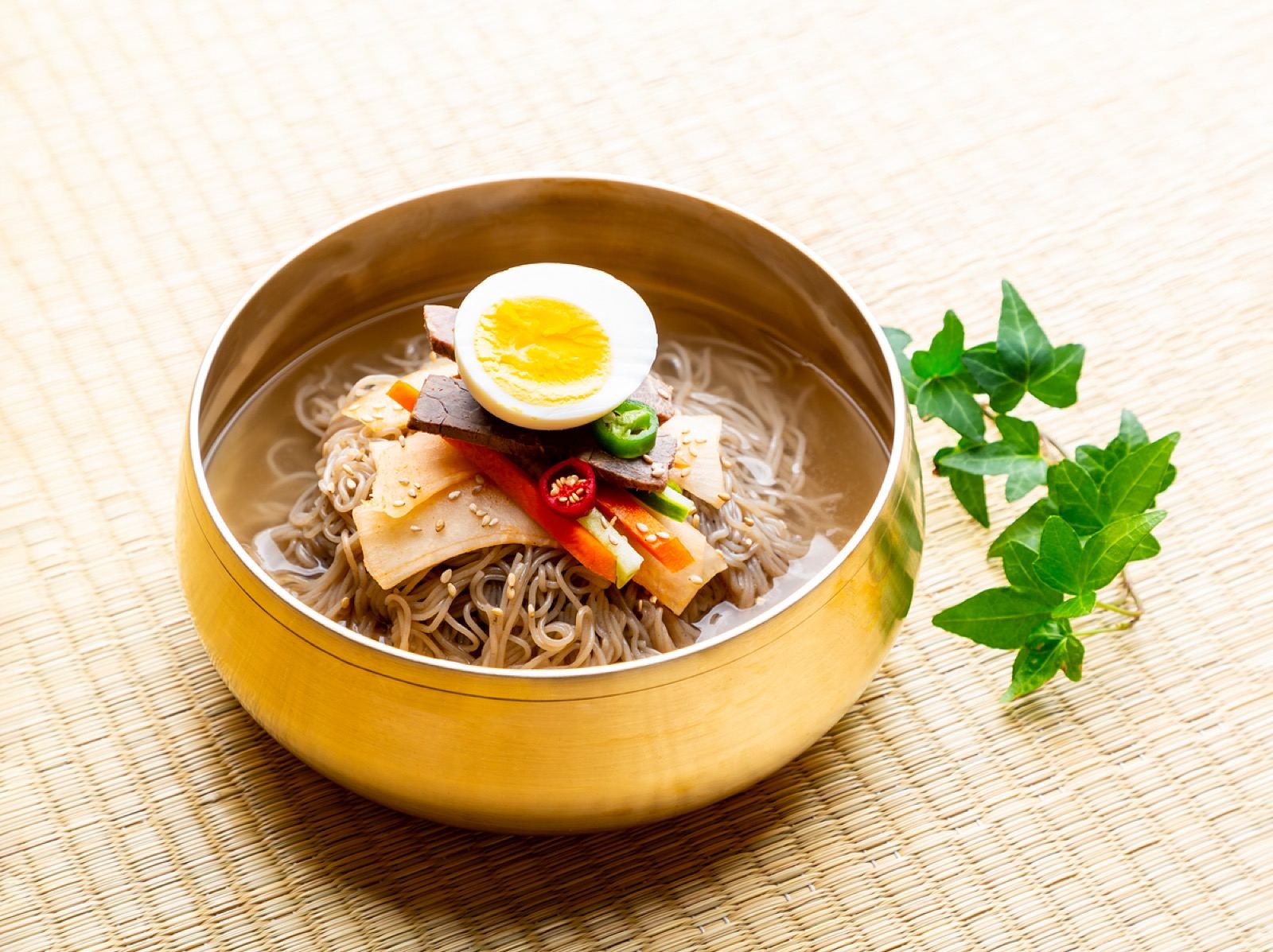
Naengmyeon is Korea's cold noodle dish — chewy buckwheat noodles served icy cold, either in a clear chilled broth (mul-naengmyeon) or tossed in a fiery gochujang sauce (bibim-naengmyeon). It's one of the most refreshing things you can eat in a Korean summer, and one of the most confusing to order the first time. Here's the whole thing: the styles, how to eat it, and where it's best.
The two styles
Almost every naengmyeon decision comes down to these two:
- Mul-naengmyeon (물냉면) — "water cold noodles." Buckwheat noodles in a clear, chilled broth (often beef or dongchimi radish-water), with ice, topped with sliced beef, half a boiled egg, cucumber and pickled radish. Tangy, clean, a little sour-sweet. This is the subtle one.
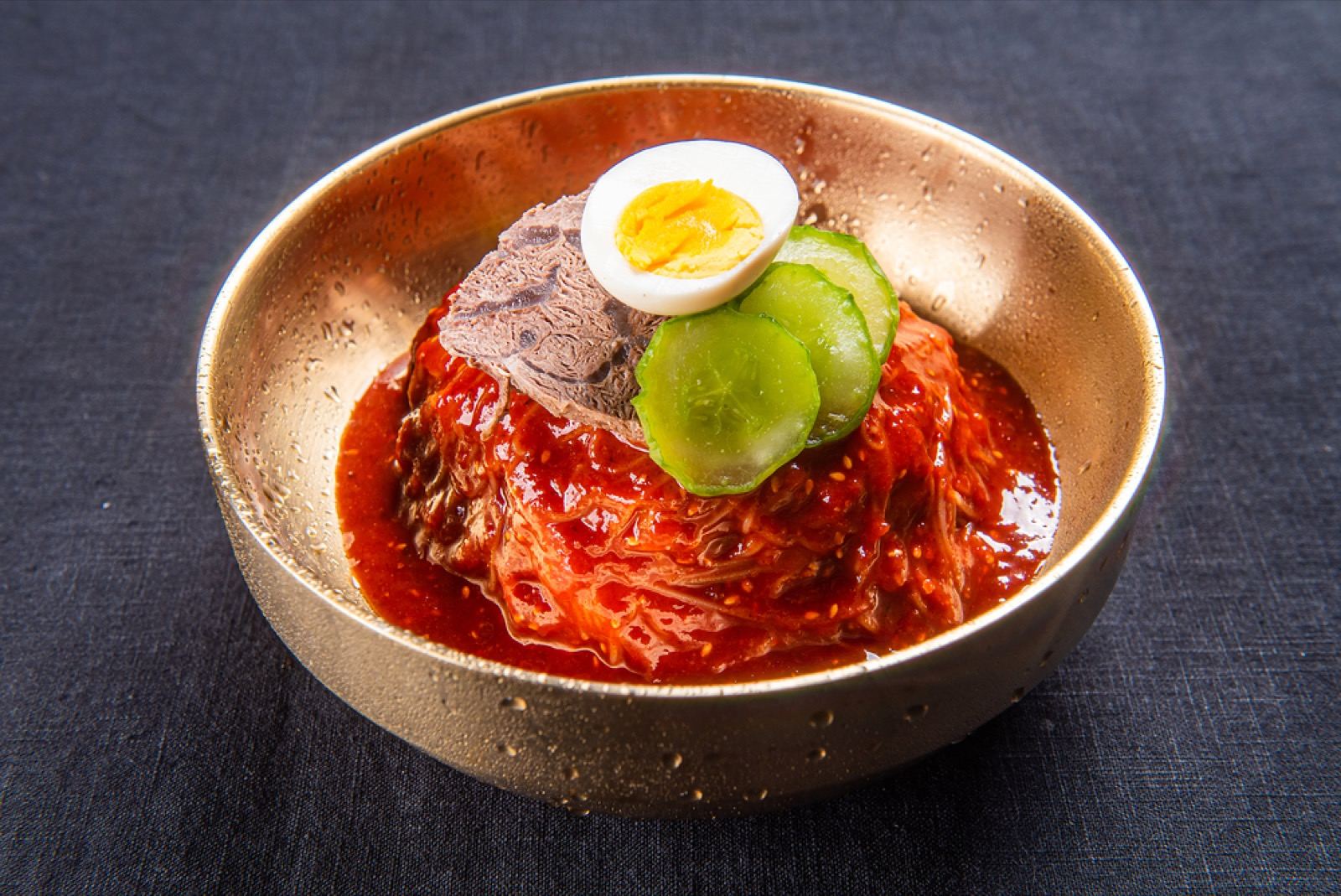
- Bibim-naengmyeon (비빔냉면) — "mixed cold noodles." The same noodles, no broth, tossed in a bright-red sweet-spicy gochujang sauce. You mix it yourself. This is the bold, fiery one.
Can't decide? Many places let you get a small broth on the side with bibim, or vice versa.
Regional roots: Pyongyang vs Hamhung
Naengmyeon came south with refugees from the north, and the two famous origin styles still define it:
- Pyongyang-style — mul-naengmyeon with a mild, subtle broth and pure buckwheat noodles. An acquired taste some call "bland" at first; converts become obsessive about it.
- Hamhung-style — leans to hoe-naengmyeon, a bibim variant topped with spicy marinated raw skate or fish, using chewier sweet-potato-starch noodles. Punchy and chewy.
You'll find the Hamhung hoe version especially around Sokcho's Abai Village, settled by North Korean refugees.
How to eat it like you've done it before
- Taste the broth first (mul), before adding anything.
- Add vinegar and hot mustard (gyeoja) to taste — they're on the table for a reason; a splash of each lifts the whole bowl.
- For bibim, mix thoroughly so every strand is coated before the first bite.
- The scissors are normal — staff often cut the long, chewy noodles so they're easier to eat. Let them.
- A bowl runs around 9,000–13,000 won as of 2026.
First time? Order mul-naengmyeon on a hot day and add vinegar and mustard gradually. It's the cleanest, most refreshing introduction — bibim's chili can overwhelm the subtlety before you've learned what to look for.
When to eat it
Summer is peak naengmyeon season — it's the classic hot-weather cure — but Koreans eat it year-round, and famously as a cold "finisher" after a hot, fatty Korean BBQ meal. If you've just had galbi, a shared bowl of mul-naengmyeon is the traditional, perfect ending.
Where to find it
Naengmyeon is everywhere — dedicated naengmyeon houses, most BBQ restaurants, and northern-style specialists in Seoul and along the east coast. For the Hamhung hoe style, head to Sokcho and the Abai Village area. For classic Pyongyang mul, seek out a long-running specialist.
How to order
- Pick your style: mul (clear broth) or bibim (spicy, no broth).
- Taste the broth or mix the sauce before adjusting.
- Add vinegar and mustard to taste.
- Let them cut the noodles with scissors.
- Have it after BBQ or on a hot day for the full effect.
If you're chasing the Hamhung hoe-naengmyeon at its source, pairing it with a Sokcho and Seoraksan trip makes a great east-coast outing.
Sort trains & passes for your Korea trip
Learn the two styles and the vinegar-and-mustard trick, and naengmyeon goes from confusing to crave-worthy fast. It's one of the great, refreshing pleasures of eating in Korea.