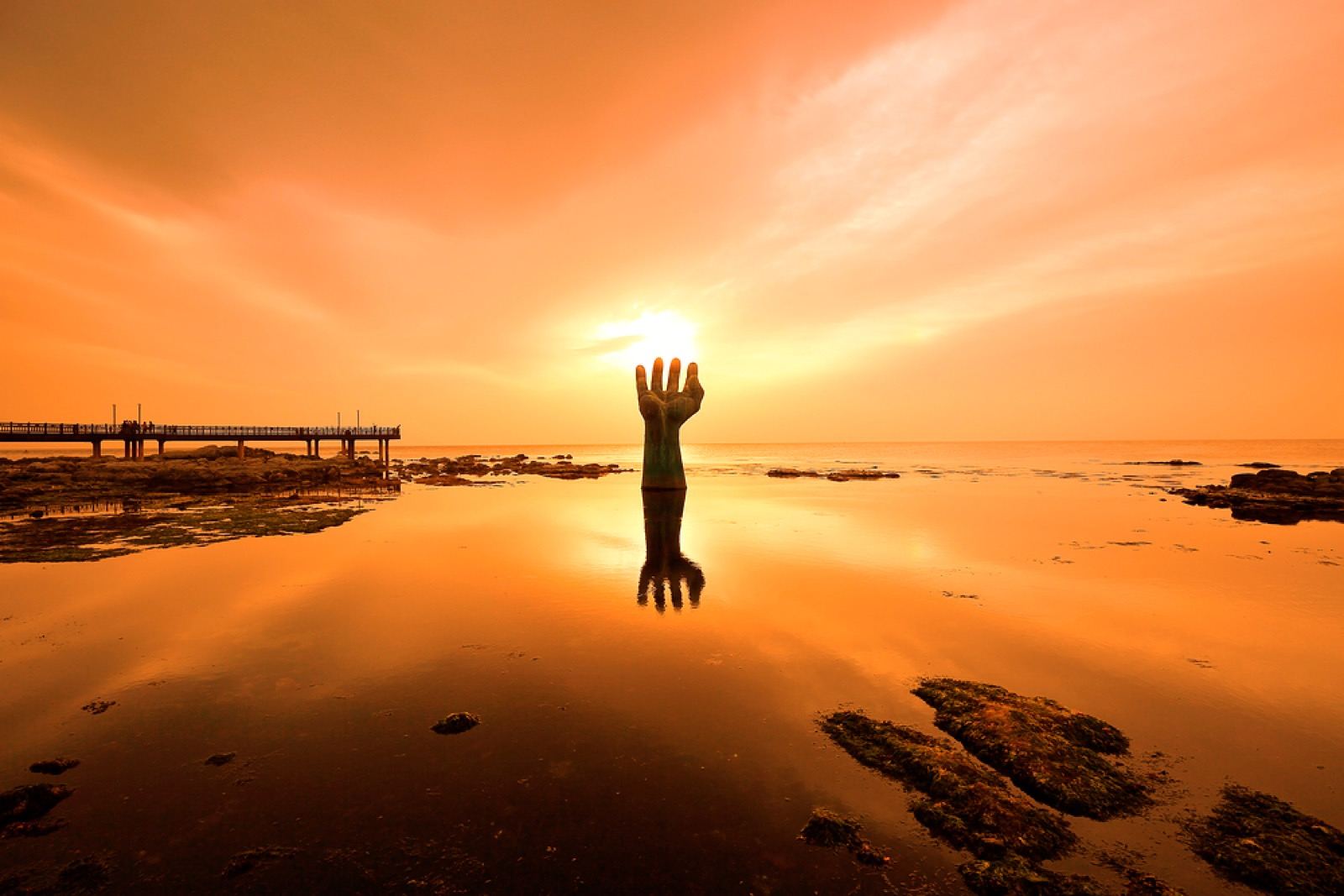
Pohang is Korea's sunrise city, and its signature image is Homigot, a cape at the country's easternmost edge where a giant bronze hand rises straight out of the sea. On the first morning of the year, thousands gather here to watch the mainland's earliest sunrise break over that sculpture. But Pohang is more than a New Year's ritual: it's a steel town with a walkable coast, a wild piece of public art and a genuinely strange winter food worth planning around.
It's an easy KTX ride from Seoul, and it feels a world away from the capital.
Homigot: the Hands of Harmony
The thing you come for is the Hands of Harmony (Sangsaeng-ui Son) at Homigot, a pair of giant bronze hands — one reaching up out of the water, its twin on the shore. It marks the mainland's most easterly point, which is why it's Korea's most famous sunrise spot. You don't have to come on January 1 with the crowds; any clear dawn does the job, and the square around it has a lighthouse and a small sunrise-themed park to fill out a morning.
Come at dawn if you possibly can. The sculpture is designed around the rising sun, and the light off the East Sea is the whole point.
Space Walk: a roller coaster you walk
Pohang's most surprising sight is Space Walk, a huge steel structure on a hill in Hwanho Park shaped like a roller coaster you climb on foot. It loops and rises over the city and coast, it's free, and the views from the top are excellent. It's an unexpected, slightly vertiginous thing to find in an industrial port, and it's become the city's standout modern landmark.
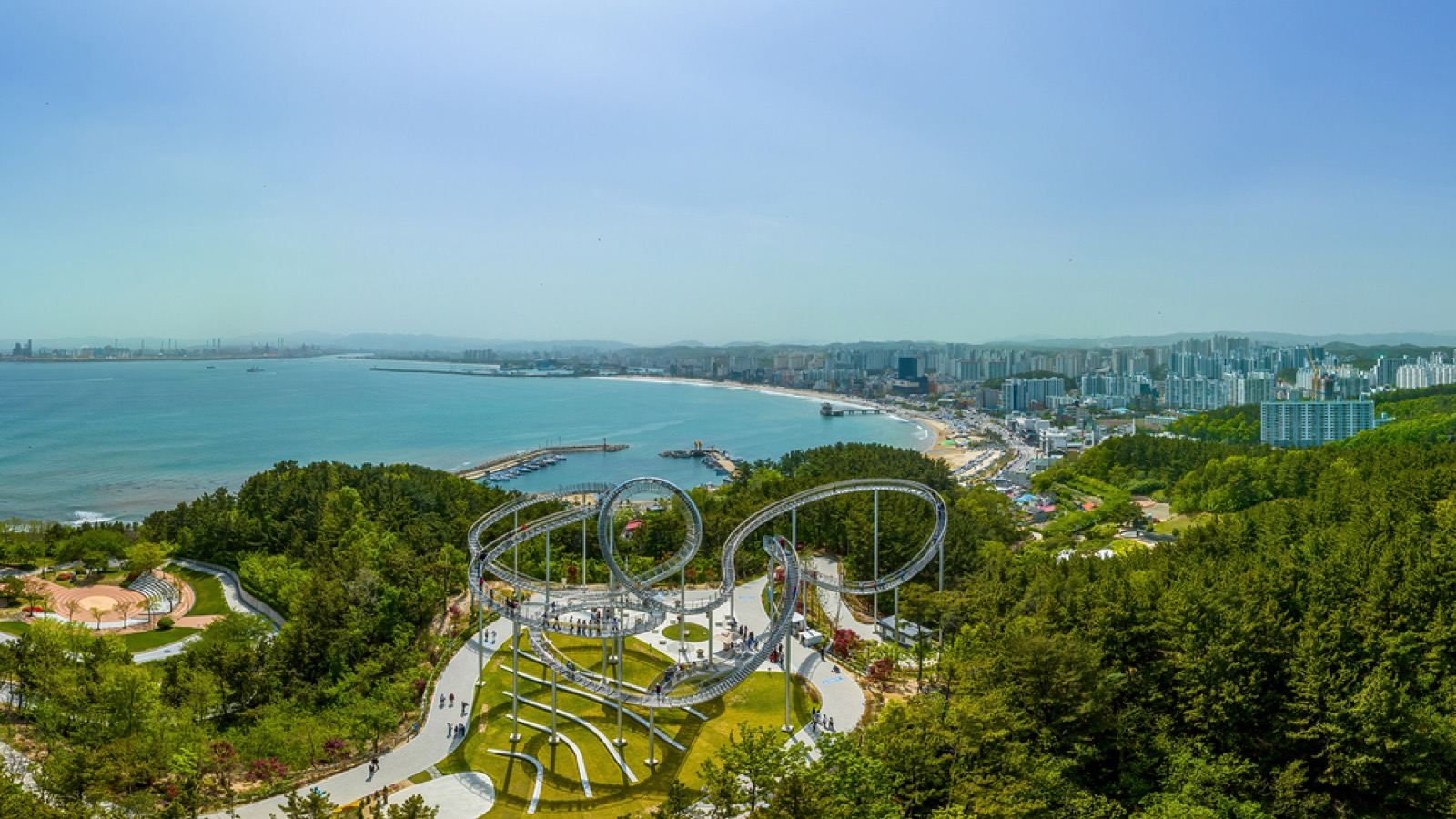
If you're afraid of heights, know that the track is high and open; if you're not, it's one of the best free views on the coast.
What about the steel city itself?
Pohang is built around POSCO, one of the world's big steelmakers, and the industry is part of the city's identity rather than something to hide from. You won't tour the mill, but the working-port energy gives Pohang a different texture from a tourist town. Pair it with Yeongildae Beach in the city and the old port of Guryongpo, with its restored Japanese-era street, for a fuller picture.
When should you go, and what should you eat?
Pohang is a year-round coast, but winter brings its oddest and most prized food:
- Gwamegi — half-dried herring or saury, cured in the cold sea wind, eaten wrapped in seaweed and greens. It's a winter-only Guryongpo specialty and a real acquired taste, but a bucket-list bite for adventurous eaters. Season runs roughly through the cold months, so check timing.
- Mulhoe — cold raw-fish soup, bracing and refreshing, better in the warm months.
- Fresh raw fish — straight off the boats at the ports, as good here as anywhere on the coast.
Homigot is a sunrise, so it only works if you commit to the early start. Stay in Pohang the night before rather than trying to arrive at dawn from elsewhere — the whole experience depends on being there as the sun comes up.
Getting there
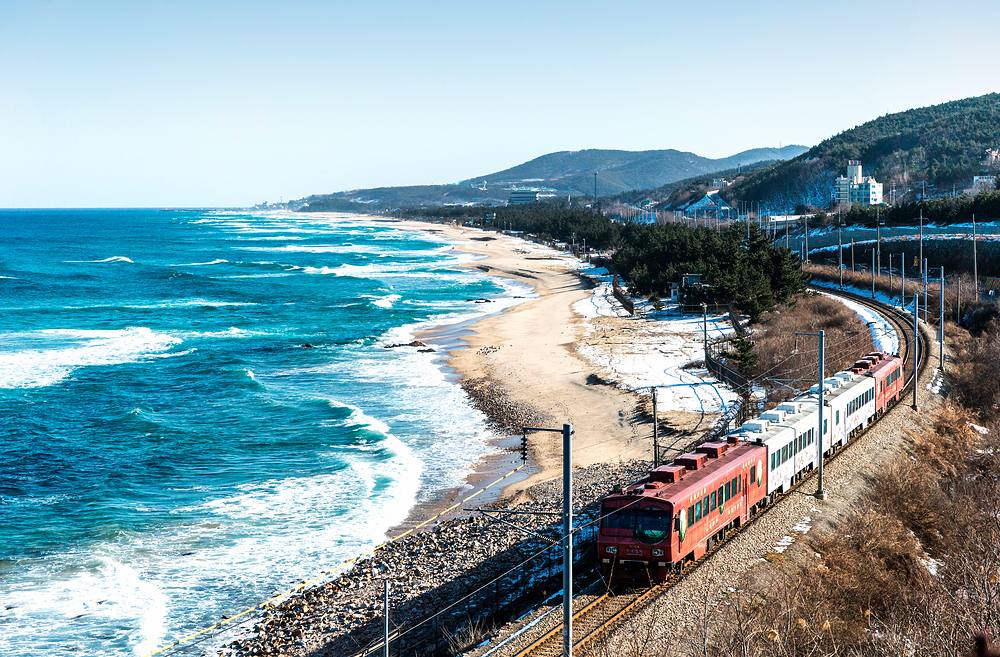
Pohang is well connected by KTX, roughly two and a half hours from Seoul as of 2026, which makes the far east coast far more reachable than it looks on a map. From the station, the beach, Space Walk and Homigot are spread out, so plan on taxis or local buses between them, and book a bed in town if you're chasing the sunrise.
How to do it
- Stay overnight in Pohang so you can be at Homigot for dawn.
- Catch the sunrise at the Hands of Harmony, then warm up over breakfast.
- Walk Space Walk for the free city-and-coast view later in the day.
- Time a winter trip for gwamegi if you want the full, strange local flavor — and check the season first.
A guided east-coast day is the easiest way to link Homigot, Space Walk and the ports without piecing together local buses.
Find east-coast tours & experiences
Come for the sunrise and the giant hand, and give Pohang a day to show its stranger, more industrial charm. It's not a polished tourist town, and it's better for it.