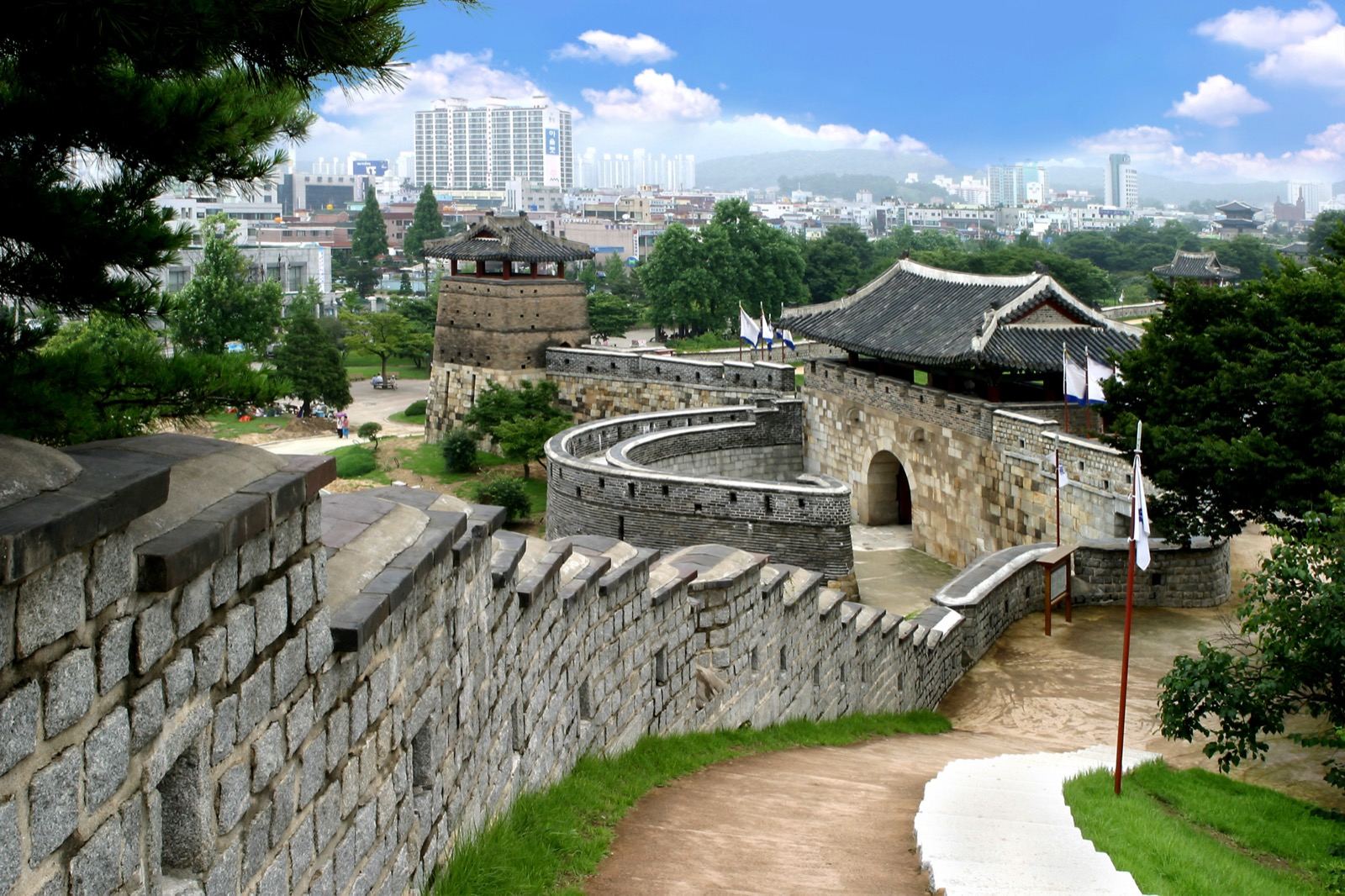
Hwaseong is a UNESCO-listed fortress wall built in the 1790s that loops nearly six kilometers around central Suwon, and you can walk the whole thing in an afternoon. It's one of the best day trips beyond Seoul precisely because it's so close — under an hour by metro — yet most visitors never leave the capital to see it. The wall, its floodgates and command posts are the real thing, not a reconstruction from scratch, and the walk is genuinely good.
Why Hwaseong is worth the trip
King Jeongjo built it as a planned new city and a monument to his father, using cutting-edge engineering for its time (there's even a famous crane the scholar Jeong Yak-yong designed to lift the stones). The result is a fortress that's both military architecture and a piece of Joseon idealism. It survived war damage and was rebuilt from the original construction records, which is partly why UNESCO listed it.
Compared with a packed Seoul palace, this is open sky, city views and a proper walk.
Walking the wall
The full circuit is about 5.7 km and takes two to three hours at a strolling pace with photo stops. It's mostly gentle with a couple of short climbs to the high points. You don't have to do all of it — pick a stretch:
- Janganmun, the grand north gate, is the largest fortress gate in Korea and a good starting point.
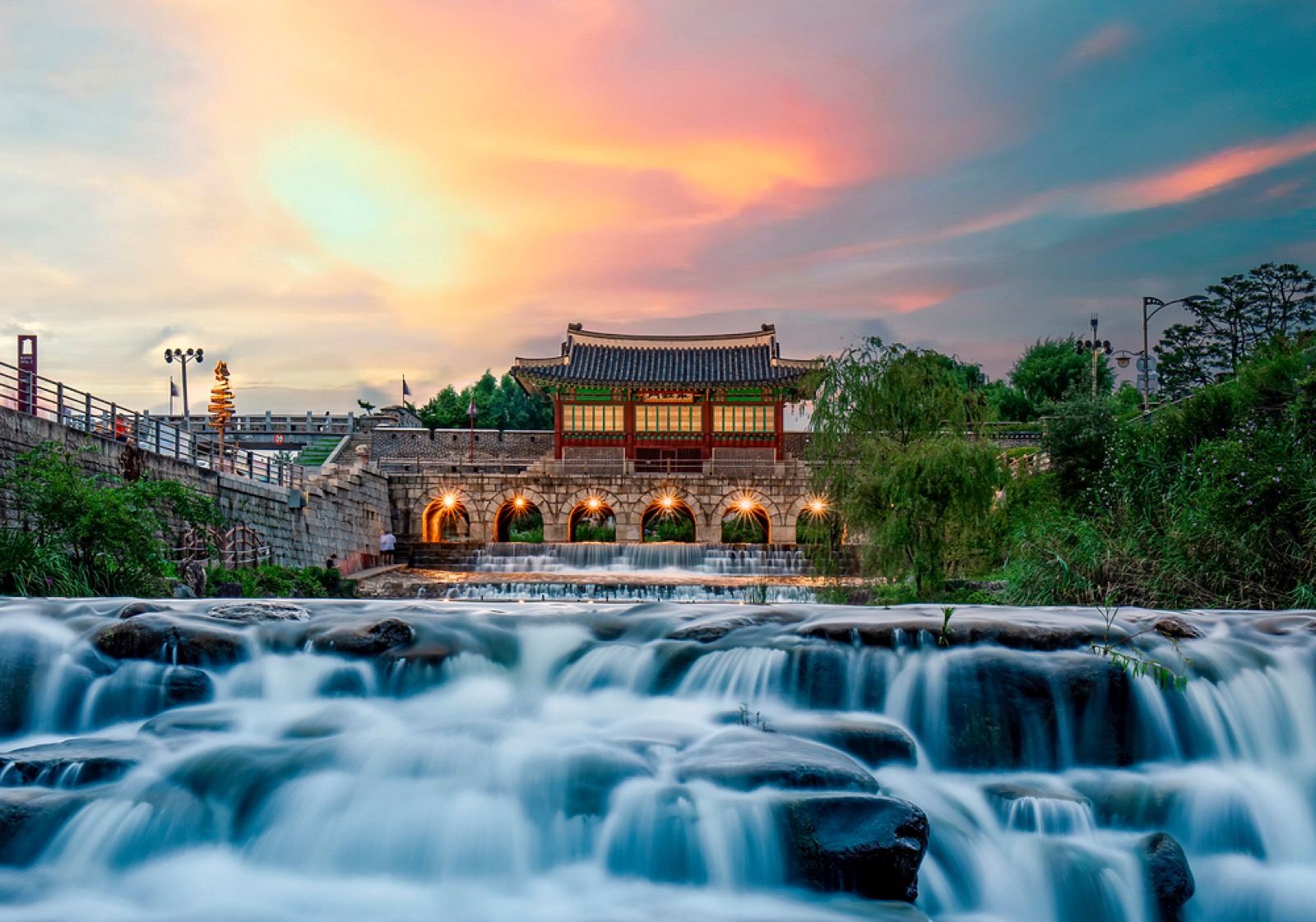
- Hwahongmun, the arched northern floodgate over the stream, is the postcard shot, especially lit up in the evening.
- Seojangdae (the western command post) sits at the highest point, with the best views over the city.
- The flag-topped watchtowers and secret gates along the way break the walk into rewarding little targets.
Don't skip the palace and the fun stuff
Inside the walls, Hwaseong Haenggung is the large detached palace where the king stayed on visits — worth an hour, and the setting for changing-of-the-guard and martial-arts demonstrations on many days (check the schedule). For a lazy loop, the wall trolley trundles a scenic section, and there's an archery range where you can shoot traditional bows for a small fee.
If you only have half a day, do Janganmun to Seojangdae to Hwahongmun on foot, then the palace. That's the greatest hits without the full circuit.
What to eat in Suwon
Suwon is famous for wang-galbi (Suwon galbi) — big, generously cut beef short ribs, grilled and only lightly seasoned to let the meat speak. It's the local specialty and the natural reward after the walk. The galbi restaurant district near the fortress has long-running places set up for it. Expect it to be a splurge compared with everyday Korean barbecue.
Getting to Suwon
- Seoul Metro Line 1 runs straight to Suwon Station; from central Seoul it's roughly an hour as of 2026. The KTX and bus also serve the city.
- From Suwon Station, a short bus or taxi ride reaches Janganmun and the fortress core.
- It pairs naturally with the Korean Folk Village nearby if you want a fuller day.
How to do it
- Take Line 1 to Suwon, then bus/taxi to Janganmun to start the wall.
- Walk the northern stretch past Hwahongmun up to Seojangdae for the views.
- Tour Hwaseong Haenggung palace inside the walls.
- Finish with Suwon galbi in the restaurant district.
- Time Hwahongmun for dusk if you can, when it's lit.
Getting your Seoul transit and any onward rail sorted in advance makes this an easy, cheap escape from the capital.
Find day trips & experiences near Seoul
Come for the wall walk, stay for the galbi, and you'll wonder why the day-trip crowds don't make it the short hop down here more often.