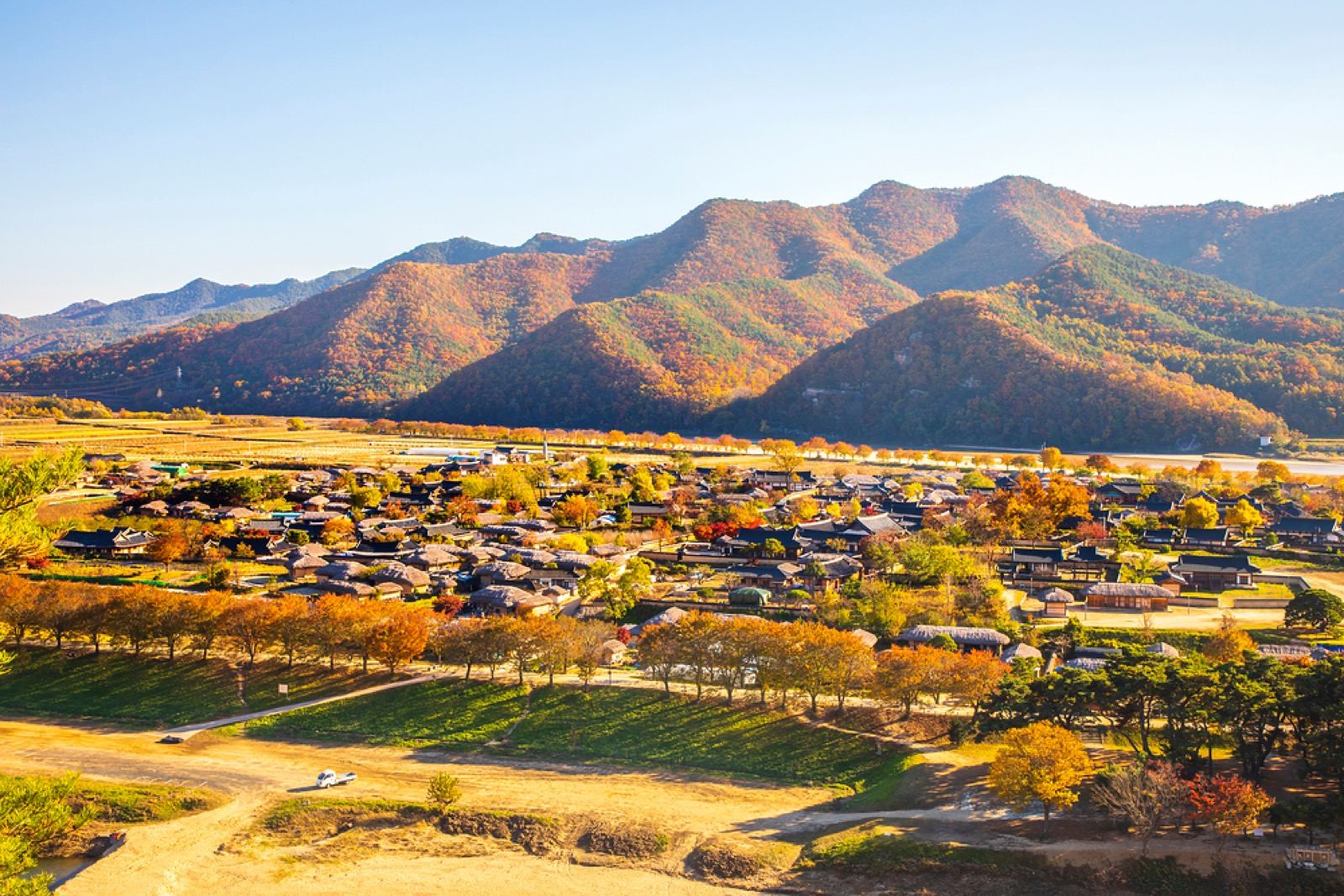
Andong is where Korea keeps its Confucian roots, and the two things to build a visit around are Hahoe Folk Village and the Hahoe mask dance. One is a living village of aristocratic clan houses cradled in a river bend; the other is a raucous masked satire that has mocked the ruling class for centuries. See them together and the town clicks into place. It's a couple of hours from Seoul, and a world away from it.
Hahoe Folk Village
Hahoe is a UNESCO-listed village that people still live in, not a museum reconstruction. Tiled-roof homes of the old Ryu clan sit alongside thatched servants' houses, wrapped on three sides by a loop of the Nakdong River (the name means "river returning"). Wander the earthen lanes, look into the courtyards, and you get a rare sense of how a Joseon-era aristocratic village actually worked.
Give it a couple of hours on foot. Go early or late to have the lanes to yourself, and don't rush past the far end, where the crowds thin and the river views open up.
The mask dance that still bites
Andong's other headline is the Hahoe Byeolsingut Talnori, a masked dance-drama with roots in village shamanic ritual. What makes it worth seeking out is the satire: the characters — a pompous yangban aristocrat, a corrupt monk, a sharp-tongued servant — are there to be mocked, and the humor still lands even without the language. The carved Hahoe masks themselves are prized enough to be national treasures.
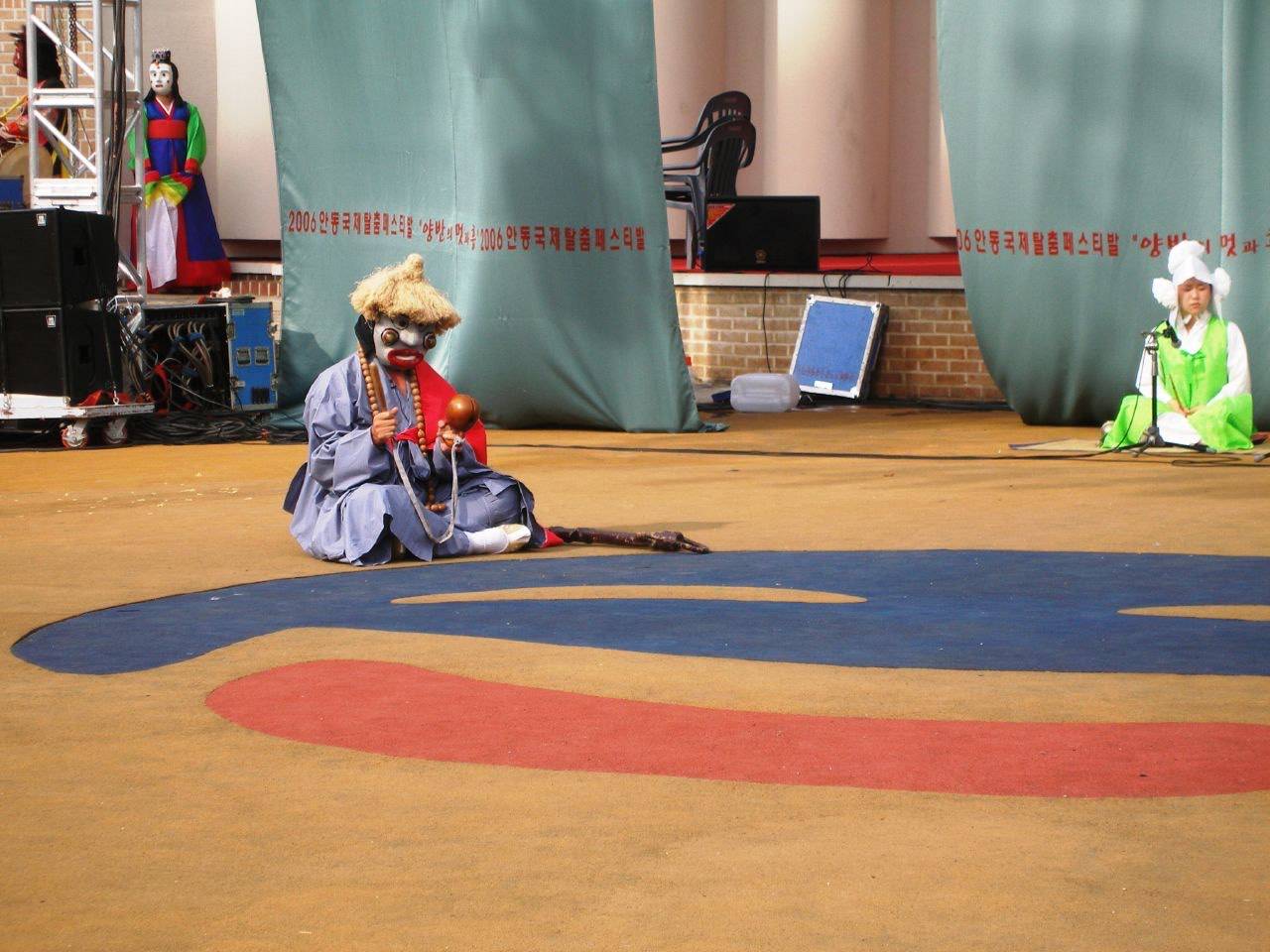
Performances are staged at Hahoe on a regular schedule, often on weekends, with more during festival season. Times change, so check the current schedule before you plan your day around one.
Beyond Hahoe
Andong rewards a full day or an overnight:
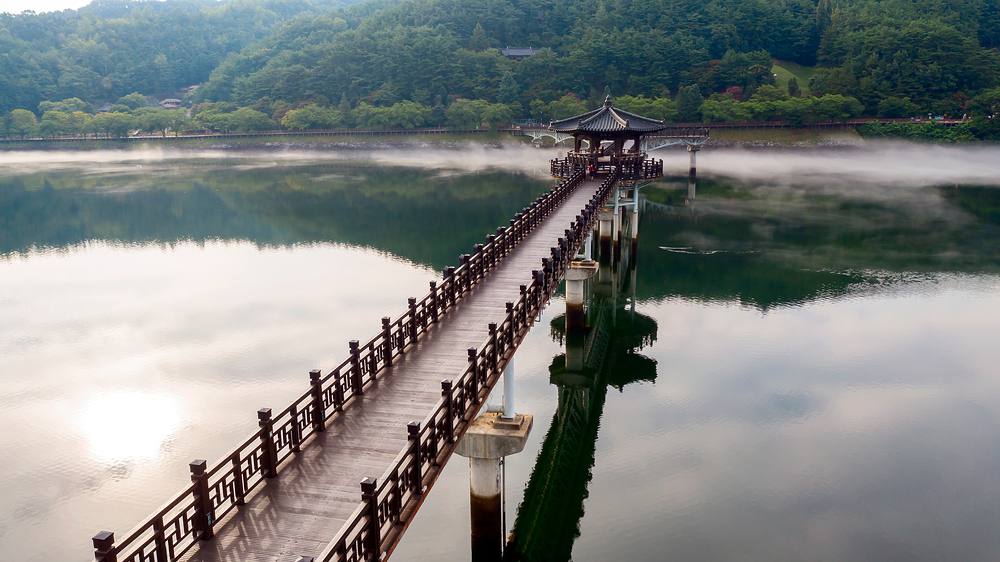
- Woryeonggyo Bridge — a long wooden footbridge lit and mirrored on the river at night, the town's loveliest evening walk.
- Dosan Seowon — a serene Confucian academy in the hills, one of Korea's most important, founded by the scholar on the 1,000-won note.
- Andong Mask Dance Festival — if you can time it (usually late September into early October, but confirm the year's dates), the whole town leans into masks and performance.
What to eat
Andong is a genuine food destination, not just a cultural one:
- Andong jjimdak — chicken braised in a sweet-savory soy sauce with glass noodles and vegetables, the dish the city gave the country. Made for sharing.
- Salted mackerel (gan godeungeo) — mackerel cured to survive the trip inland, now an Andong icon, grilled and served with rice.
- Heot-jesatbap — a "fake ancestral-rite" rice bowl of seasoned sides, comforting and vegetarian-friendly.
- Andong soju — a strong, clear distilled rice liquor with a long local pedigree. Sip it. For the full regional-food picture, see our what to eat across Korea guide.
Getting there
Andong is well connected by KTX, roughly two hours from Seoul as of 2026, which makes it far more reachable than its off-the-beaten-track feel suggests. From Andong station, Hahoe Village is a 30–40 minute bus or taxi ride out of town, so allow time and check the last return bus.
Andong makes more sense as an overnight than a rushed day trip. Do Hahoe and the mask dance by day, Woryeonggyo by night, and eat very well in between.
How to do it
- Base in Andong for a night if you can, rather than day-tripping.
- Do Hahoe early, and time your visit to catch a mask-dance performance.
- Save Woryeonggyo for after dark.
- Eat the jjimdak and try the local soju.
A guided cultural day is the easiest way to link Hahoe, the academies and the mask dance without renting a car.
Find Korea cultural tours & experiences
Andong asks a little more effort than the coast, and pays it back in atmosphere. Come for the village and the satire, stay for the soju and the quiet.