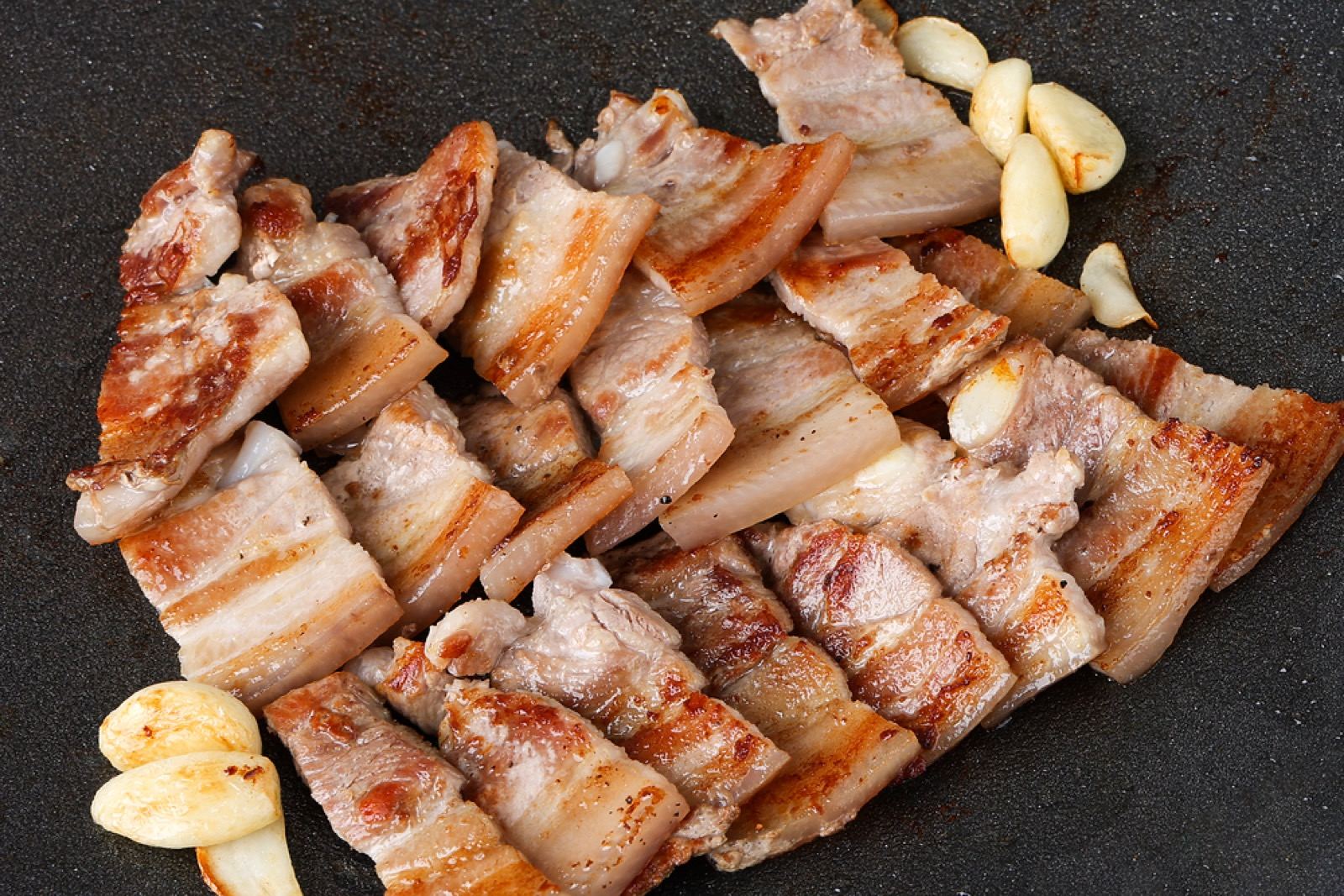
Korean BBQ (gogi-gui) is the country's great communal night out: you grill your own meat over a fire built into the table, wrap it in leaves with a dozen free side dishes, and wash it down with soju or beer. It looks intimidating from the outside and is genuinely easy once you know the moves. Here's how the whole thing works.
How Korean BBQ works
You order raw meat by weight or portion, and it comes to a grill set into your table. Either the staff cook it for you or you do it yourself, turning and snipping the meat with scissors as it cooks. Around it arrive banchan (free side dishes), lettuce and leaves for wrapping, and dipping sauces. It's meant to be slow, social and washed down with a drink.
The cuts to know
Pork is the everyday choice:
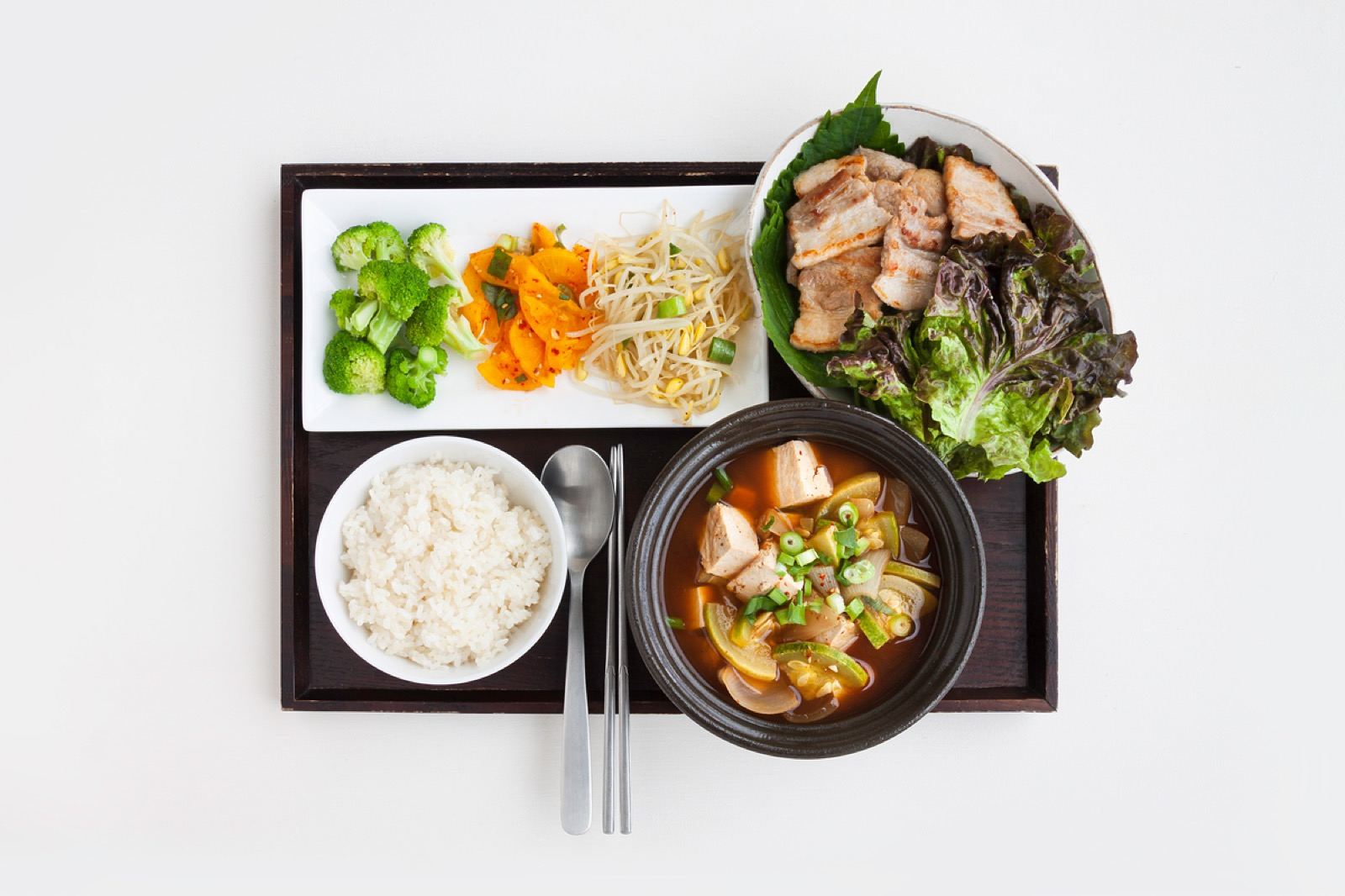
- Samgyeopsal — thick pork belly, the national favorite. Crisp-edged and rich.
- Moksal — pork shoulder/neck, leaner and chewier than belly.
- Hangjeongsal — pork jowl, prized for its texture.
Beef is the splurge, and the word to know is hanwoo, premium Korean beef:
- Deungsim / chadolbagi — sirloin and thin-sliced brisket.
- So-galbi — beef short rib, often marinated in a sweet soy sauce.
For the adventurous, gopchang and makchang (grilled offal) are a beloved late-night specialty.
Pork or beef?
Order samgyeopsal for the classic, affordable experience; it's what most Koreans eat most of the time. Save hanwoo for a splurge meal — it's expensive but genuinely special, and best kept simple with just salt. Marinated galbi is the crowd-pleaser if you want something sweeter and less hands-on.
Don't confuse dak-galbi (a stir-fried spicy chicken dish, famous in Chuncheon) with BBQ galbi. Different dish entirely — good, just not table-grilled.
How to eat it like a local
The ritual is the fun part:
- Grill the meat, turning it once, and snip it into bite-size pieces with the scissors.
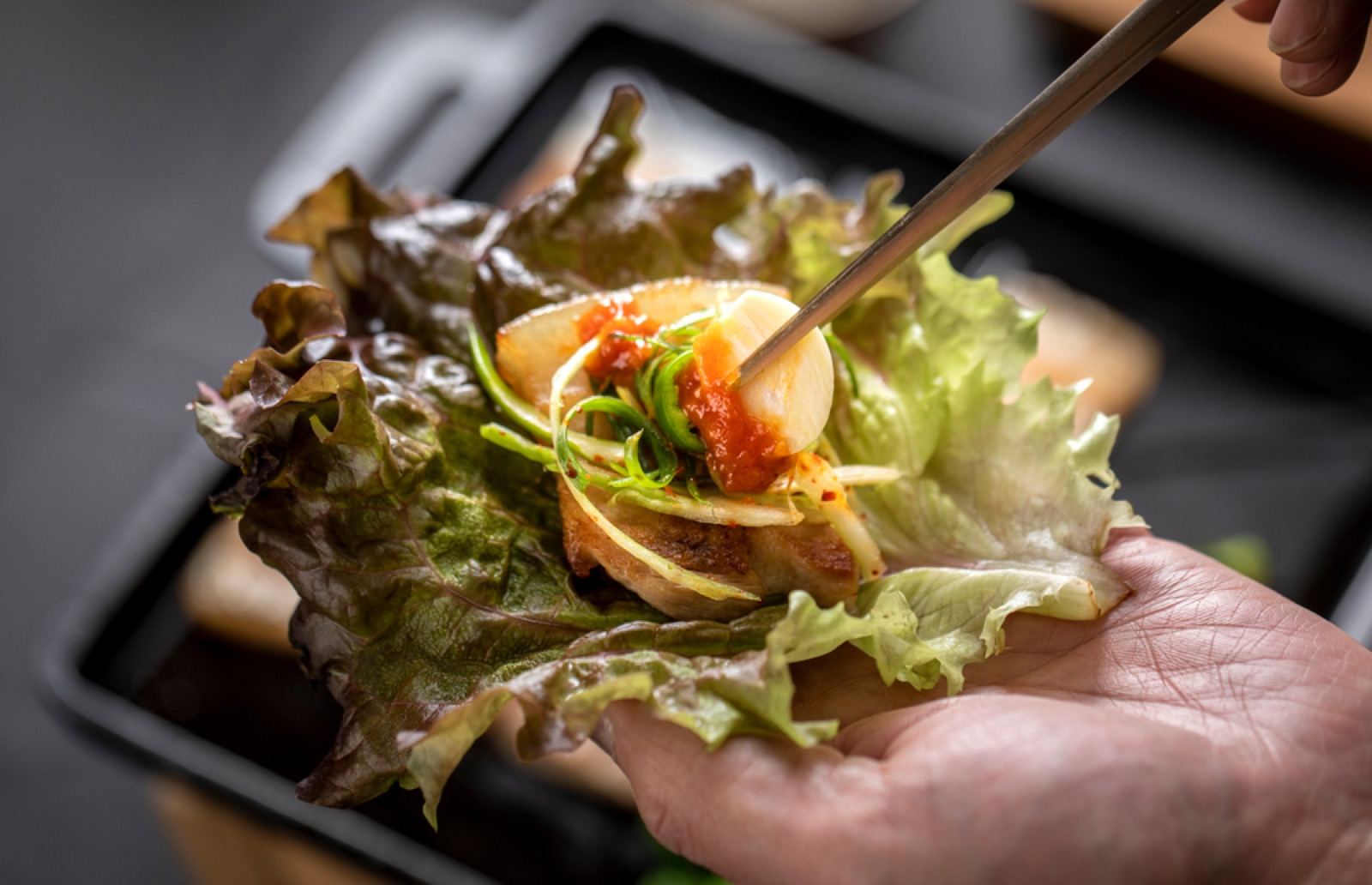
- Build a ssam: take a lettuce or perilla (kkaennip) leaf, add a piece of meat, a dab of ssamjang (soybean-chili paste), a slice of raw garlic or grilled kimchi.
- Wrap and eat in one bite. That's the whole technique.
- Dip plain cuts in the salt-and-sesame-oil dish; dip marinated cuts as-is.
- Finish with carbs — a cold naengmyeon (buckwheat noodles) or doenjang jjigae and rice, or fried rice (bokkeumbap) made in the grill pan.
Ordering and etiquette
- Meat is usually ordered by portion (inbun), and many places have a two-serving minimum. Ordering for at least two is the norm.
- Banchan and lettuce refills are free — just ask.
- Drinks: soju, beer, or the two mixed (somaek) are the classic pairings. Pour for others, not yourself, if you want to be polite.
- Cards work almost everywhere; no tipping.
- Some older or offal spots prefer cash, so carry a little.
Where to eat it
Everywhere, honestly — Korean BBQ is on every street. A few regional notes: Busan is known for galmaegi-sal (a marinated pork skirt cut), and any city's meat district or market area is a safe bet. Pair it with the local specialties in our regional food guide, or dig into Busan for a food-heavy base.
How to do it
- Go with at least two people to clear the usual minimum and try more cuts.
- Start with samgyeopsal, add a marinated galbi, and splurge on hanwoo only if you want the top tier.
- Let the staff help — many will grill and cut for you, especially if you look unsure.
- End with noodles or fried rice, the way locals close out a BBQ meal.
If you'd rather have a local walk you through your first grill and order the right cuts, a food tour is a soft landing.
Korean BBQ is less a meal than an evening. Grab a table, order too much, and settle in — this is how Korea likes to eat together.