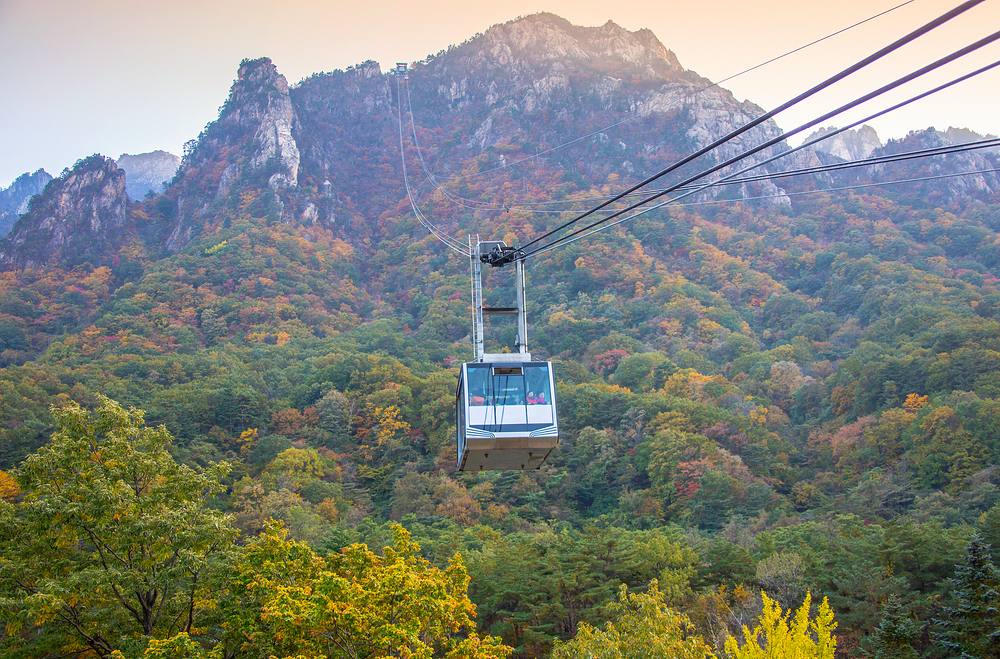
Korea's best cable cars are on the south coast — Tongyeong (Mireuksan) for island panoramas, Yeosu for a glass-floor ride over the sea at night, Busan Songdo out over the water, and Mokpo for one of the country's longest crossings. Inland, Daedunsan's cloud bridge and Naejangsan's autumn foliage stand out. Expect roughly 15,000–30,000 won round-trip depending on cabin type, ride a clear day, and book timed tickets ahead for weekends.
Some of Korea's best views come from a cable car, and the south coast is dotted with them — each one lifting you over islands, cliffs and glittering night harbors. They're cheap, easy, and they turn a good coastal trip into a memorable one. This guide covers the rides worth planning around, what each costs, how to ride them, and when to go.
Why cable cars are a south-coast secret
Korea's southern coastline is a maze of hundreds of islands — lovely from the water and better still from above. A cable car gets you there fast: in ten or fifteen minutes you go from harbor level to a ridgeline with the whole archipelago spread out below. Several run glass-floor cabins, and a few are at their best after dark, when the ports light up. Because foreign tourists mostly stick to Seoul, you'll ride these alongside Korean domestic travelers and little else.
What the ride is actually like
These are the main event, not a quick shuttle. A typical ride runs 10 to 20 minutes each way, climbing steadily so the view opens up in stages: harbor, then coastline, then the full scatter of islands. Many operators offer two cabin types — a standard car and a pricier crystal (glass-floor) car where you watch the sea or forest slide by beneath your feet. The upgrade is worth it if heights don't bother you. At the top there's usually an observation deck, a café and short walking trails, so budget an hour or two rather than treating it as a there-and-back. The cabins are enclosed and comfortable in any season, which makes a cable car a solid rainy-shoulder-season plan — as long as the cloud stays high enough to see through.
The best cable cars in Korea at a glance
| Cable car | Best for | Round-trip (approx) | Note |
|---|---|---|---|
| Tongyeong (Mireuksan) | Island panorama | 16,000–21,000 ₩ | The classic; longest island view |
| Yeosu Maritime | Night views over the sea | 17,000–24,000 ₩ | Glass-floor; ride after dark |
| Busan Songdo Marine | Easy city add-on | 15,000–23,000 ₩ | Runs out over the sea itself |
| Mokpo Marine | Fewest crowds | 22,000–29,000 ₩ | One of Korea's longest |
| Sacheon Bay | Routing Jinju↔coast | 15,000–20,000 ₩ | Sea, island & mountain crossing |
| Daedunsan | Cliff + cloud bridge | ~12,000 ₩ | Pair with suspension bridge |
| Naejangsan | Autumn foliage | ~11,000 ₩ | Late Oct–early Nov |
Prices are as of 2026 and vary by cabin type (standard vs crystal/glass-floor) — check the current fare when you book.
The coastal rides to know
Tongyeong (Mireuksan) — the classic
A long cabin ride up Mireuksan for a sweeping panorama of the island-studded Hallyeo sea. On a clear day you can see for miles. It's the most complete island view on the coast, and the easiest to build a day around — pair it with the Dongpirang mural village and chungmu gimbap in town. See our Tongyeong 2-day itinerary.
Yeosu (Maritime Cable Car) — best after dark
Glass-floor cabins glide between Dolsan and the mainland directly over the water. Ride it after dark for Yeosu's famous illuminated night harbor — the single most dramatic cable-car experience in the country. Go up around sunset to catch both daylight and the lights.
Busan (Songdo Marine) — easiest to add to a city trip
Runs out over the sea itself at Songdo Beach, with crystal-floor cabins. It's the simplest to slot into a Busan itinerary without a dedicated trip — ride it, walk the coastal skywalk, and you're back in the city for dinner. See Busan & Gyeongju in 5 days.
Mokpo (Marine Cable Car) — most underrated
One of Korea's longest cable cars, crossing mountain, sea and bridge on the underrated southwest coast. Crowds are thinnest here, and the two-stage ride (mountain station, then out over the sea to an island) gives you two very different views in one ticket.
Sacheon Bay
A scenic crossing over sea, island and mountain, handy if you're routing between Jinju and the coast. Less of a destination in itself, more a rewarding stop on a wider south-coast loop.
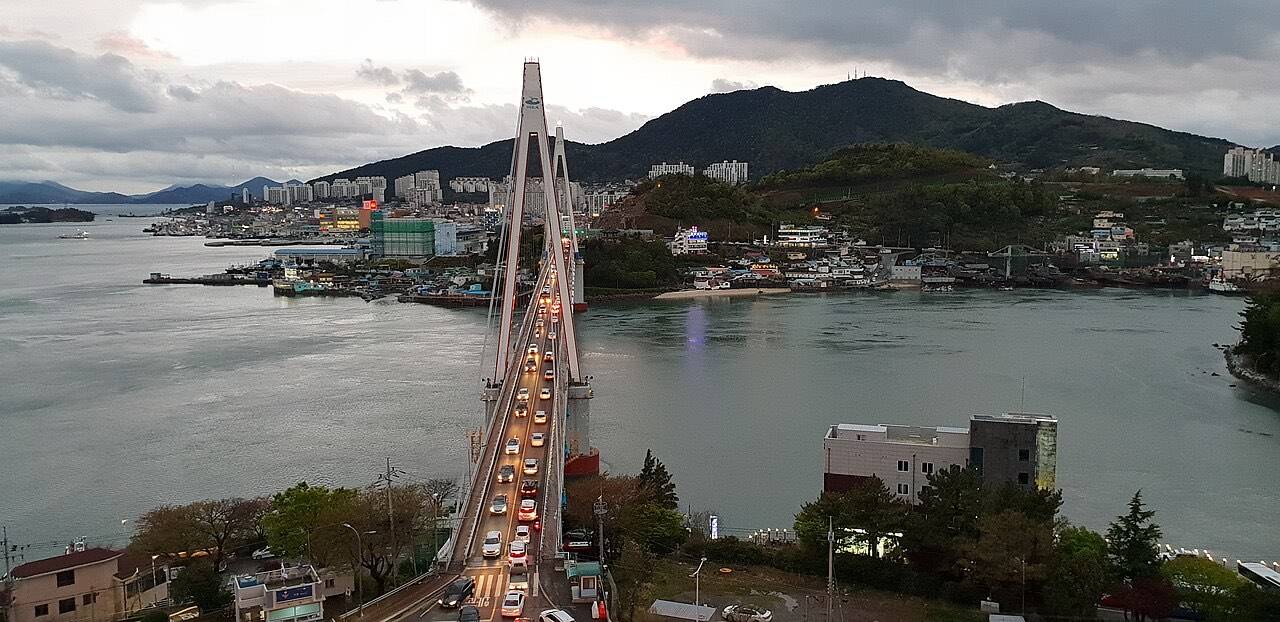
Cable cars live and die by the weather. Save them for a clear day. On a grey or foggy afternoon you'll pay for a view of the inside of a cloud.
Beyond the coast: mountain cable cars
The south coast has the sea views, but a few inland rides are worth a detour of their own:
Daedunsan (between Daejeon and Jeonju)
Ride up, then cross the nerve-testing Geumgang Cloud Bridge, a suspension span strung between rock spires. Not for the faint of heart, and unforgettable when the autumn colors turn. The combination of cable car + cliff bridge makes this the most adventurous ride on the list.
Naejangsan
A short cable car into one of Korea's most celebrated autumn-foliage valleys. Time it for late October into early November and the maples are on fire — it's one of the country's top leaf-peeping spots, and the cable car lifts you above the crowds on the valley floor.
Jecheon (Cheongpungho)
A lake-and-mountain ride in the central highlands, a quieter option well off the foreign-tourist map. Pair it with the lakeside scenery around Cheongpung.
These run on their own seasons — foliage for Naejangsan, clear skies for Daedunsan's ridgeline — so check conditions before you build a trip around one.
Which cable car should you ride?
- Best all-round island view: Tongyeong.
- Best after dark / most dramatic: Yeosu.
- Easiest to add to a city trip: Busan (Songdo).
- Most underrated / fewest crowds: Mokpo.
- Most adventurous: Daedunsan (with the cloud bridge).
- Best for autumn color: Naejangsan.
You don't need to ride them all. Pick the one that fits your route. If you're doing a south-coast loop (Busan → Tongyeong → Yeosu), you could easily ride two or three without backtracking — see our south-coast island-hopping guide.
When to go
Clear, dry days are everything, and autumn is the safest bet for crisp air and long visibility. Summer gives you the greenest hills but also haze and afternoon storms. For the night rides (Yeosu especially), aim for a clear evening and go up around sunset so you catch both daylight and the lights. Foliage rides (Naejangsan, Daedunsan) peak late October to early November.
Good to know before you ride
- Round-trip vs one-way: most sell a round-trip by default, but several have a walking trail down, so a one-way up can be the better and cheaper choice if you're up for the descent.
- Prices vary by operator and cabin type (standard vs crystal/glass-floor), so check the current fare when you book rather than assuming.
- Weather refunds: high wind or storms can suspend service — a real risk on the coast — so keep the ride flexible and don't leave it for your last, unmovable hour.
- Accessibility: the big coastal cable cars are generally step-free to the cabin, but the summit stations often have stairs and slopes. Check ahead if that matters.
- Crowds: weekends, holidays and foliage season are busiest. A weekday morning is calmest and clearest.
How to book and ride
Most of these sell timed tickets online, and buying ahead saves you queuing — cable cars get busy on weekends and holidays, and some cap daily numbers. Booking in English through a travel platform is usually the simplest route, and often cheaper than the gate price.
- Check the weather the morning of, and keep the ride flexible if you can.
- Book a timed slot for weekends and peak seasons.
- Go near sunset for the night-view rides, midday for the clearest island panoramas.
- Pair it with the town — cable cars sit right next to Tongyeong's murals, Yeosu's harbor and Busan's beaches.
Find cable-car tickets & coastal experiences
Frequently asked questions
What is the best cable car in Korea?
For a first ride, Tongyeong's Mireuksan cable car gives the best all-round island panorama. Yeosu's maritime cable car is the most dramatic after dark with its glass floor over the sea, and Busan's Songdo Marine is the easiest to add to a city trip.
How much does a cable car cost in Korea?
Most coastal cable cars run roughly 15,000–30,000 won round-trip as of 2026, depending on the operator and whether you choose a standard or crystal (glass-floor) cabin. Inland mountain cable cars like Naejangsan and Daedunsan are cheaper, around 11,000–12,000 won.
Which Korean cable car has a glass floor?
Yeosu's maritime cable car and Busan's Songdo Marine cable car both offer crystal (glass-floor) cabins where you look straight down at the sea. Several others, including Tongyeong, offer a glass-floor cabin upgrade for a higher fare.
When is the best time to ride a cable car in Korea?
Clear, dry days give the best views, and autumn offers the crispest air and longest visibility. Ride night-view cable cars like Yeosu around sunset, and time Naejangsan and Daedunsan for peak autumn foliage in late October to early November.
Do I need to book cable car tickets in advance?
For weekends, holidays and foliage season, yes — popular cable cars sell timed tickets and some cap daily numbers, so booking ahead saves queuing and sometimes money. On a quiet weekday you can usually buy at the gate.
Can you ride cable cars in Korea in winter?
Yes. The cabins are enclosed and comfortable year-round, and winter often brings clear, crisp air and great visibility. Service can be suspended in high wind or storms, so check conditions on the day and keep the plan flexible.
For very little effort you get one of the best views on the south coast — which is why these rides are worth building a day around.