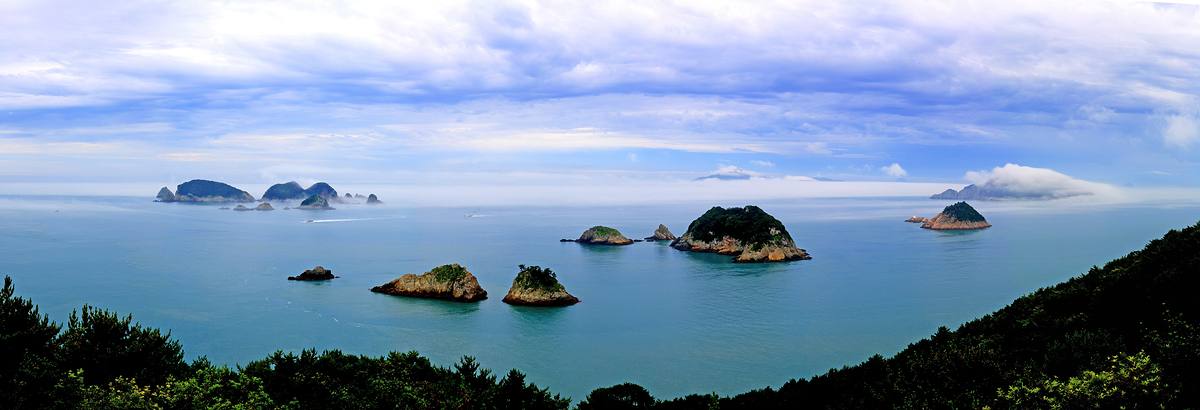
Korea's south coast — around Tongyeong, Namhae and Geoje — is the country's best island scenery and almost no foreign visitors go. Base yourself in Tongyeong, add Geoje and/or Namhae, and plan 3–5 days. There's no train to Tongyeong: take the KTX to Busan or Jinju and connect by intercity bus, or (best) rent a car. Go in late spring or autumn, book garden-island ferries and cable-car slots ahead, and come for the scenery and seafood rather than a checklist of sights.
Korea's south coast is the country's best stretch of scenery that almost no foreign visitor bothers with. The area around Tongyeong, Namhae and Geoje is a maze of islands, turquoise water, hillside villages and seafood so fresh it barely needs cooking. Koreans call it their "Naples." You'll be sharing it with domestic travelers and not much else — which is a large part of why we'd send you here. This guide covers the three anchor towns, a suggested route, how to get around, where to stay, and when to go.
The three anchors
Tongyeong — the best base
A pretty port town and the natural hub for island-hopping. Highlights: a cable car up Mireuksan for island-studded views, a toboggan-style luge, the colorful Dongpirang mural village, the morning Jungang Market, and chungmu gimbap. Ferries to outlying islands (Somaemuldo, Bijindo) leave from here. Two nights is the sweet spot — see our Tongyeong 2-day itinerary.
Namhae — rural and scenic
The quietest and most pastoral of the three: the terraced Gacheon Darangyi rice paddies tumbling to the sea, the German Village, Sangju Silver Sand beach, and the Boriam hermitage viewpoint. Namhae rewards a slow drive more than a sight list. See the Namhae destination guide and our Namhae slow-travel guide.
Geoje — Korea's second-largest island
Dramatic coastal cliffs, Oedo Botania (a manicured garden island reached by ferry), Windy Hill, and the Haegeumgang sea cliffs. It's the easiest to reach from Busan (about an hour over the Geoga Bridge). See the Geoje destination guide and the Geoje 1-day itinerary.
Why the south coast is special
- Scenery first. Coves, bridges and viewpoints reward a slow pace — plan around the drive rather than a sight list.
- Seafood heaven. Oysters, sashimi and maeuntang (spicy fish stew) straight off the boats. Tongyeong's oysters and Namhae's anchovies are regional points of pride.
- Off the tourist trail. You'll be among Korean domestic travelers, not international tour groups — prices and crowds both stay reasonable.
- Cable cars and bridges. The coast is stitched together by scenic cable cars (Tongyeong, Sacheon) and dramatic sea bridges, a sightseeing attraction in their own right — see our cable-car guide.
The coastline is best in late spring and autumn: mild, clear, and uncrowded. Midsummer is beautiful but busy with domestic holidaymakers, and ferries fill fast.
A suggested route (3–5 days)
| Days | Base | Do |
|---|---|---|
| 1–2 | Tongyeong | Cable car, Dongpirang, luge, Jungang Market, an island ferry |
| 3 | Geoje | Oedo Botania boat, Windy Hill, Haegeumgang cliffs |
| 4–5 | Namhae | Darangyi paddies, German Village, coastal drive, beaches |
- Short on time (3 days): Busan → Tongyeong (2 nights) → Geoje day trip → back via Busan.
- Full loop (5 days): Busan → Tongyeong (2) → Geoje (1) → Namhae (1–2) → out via Jinju/Busan.
You don't have to do all three — Tongyeong plus one other makes a satisfying trip.
How to get there and around
- Getting there: there's no train to Tongyeong. Take the KTX to Busan (then intercity bus, ~1.5–2 hrs) or to Jinju (closer to Namhae/Sacheon). Geoje connects to Busan by bus over the Geoga Bridge in about an hour.
- A rental car is the most rewarding way to island-hop — the coast is spread out, public buses are infrequent, and the best bits are the drives between towns. You'll need an International Driving Permit.
- Without a car: it's doable. Intercity buses link the towns, local buses and ferries reach the islands, and taxis fill the gaps. Just plan around timetables and stay central.
- Ferries: boats to the garden islands (Oedo) and outlying isles (Somaemuldo, Bijindo) run from the ports — check current timetables locally and book ahead on weekends, since weather and demand both affect sailings.
Where to stay
- Tongyeong: stay near the port/Gangguan waterfront for walkable restaurants, the market and ferry terminals.
- Geoje: base around Gohyeon (amenities) or the Gujora/Hakdong coast (scenery, near boat ports).
- Namhae: seaside pensions and view-cafés-with-rooms near Sangju beach or the German Village; this is pension country more than hotel country.
Weekends and summer fill up across all three — book ahead.
When to go
- Late spring (Apr–Jun): mild, clear, flowers out — arguably the best window.
- Autumn (Sep–Nov): crisp air, long visibility, great for cable cars and cliff cruises.
- Summer: beautiful and green but the busiest and most humid; ferries and pensions book out with domestic holidaymakers.
- Winter: quiet and bracing; some ferries and cable cars pause in high wind, so keep plans flexible.
Who it's for
Travelers who've already done Seoul and Busan and want the next layer: coastal, calm, and local. If you need nightlife and big-city energy, stay in Busan and day-trip out instead. If you want slow mornings, long seafood lunches and drives with the sea on one side, this is the trip.
How to do it
- Pick Tongyeong as your base and add Geoje and/or Namhae based on time.
- Decide car vs bus — a rental transforms the trip, but buses plus ferries work.
- Book ferries and cable-car slots ahead for weekends and peak season.
- Go late spring or autumn for the clearest weather and thinnest crowds.
- Pace it — this is a scenery-and-seafood trip, not a sight-ticking one.
Want to lock in the highlights (cable car, luge, garden-island ferries) without the language barrier? Browse the bookable experiences for the region.
Find south-coast tours & experiences
Frequently asked questions
What is the best base for island-hopping Korea's south coast?
Tongyeong is the best base — it's a walkable port town with a cable car, markets, ferries to outlying islands, and good food, and it's well connected to Geoje and Namhae. Add Geoje and/or Namhae as day trips or overnights depending on your time.
How many days do you need for the south coast?
Three to five days is ideal. Three days covers Tongyeong plus a Geoje day trip; five lets you add Namhae and slow down. You can do a satisfying trip with Tongyeong and just one other anchor.
How do you get to Tongyeong and the south coast?
There's no train to Tongyeong, so take the KTX to Busan or Jinju and connect by intercity bus (about 1.5–2 hours), or rent a car. Geoje is reachable from Busan by bus over the Geoga Bridge in about an hour.
Do you need a car to island-hop the south coast?
It's the most rewarding way, since the coast is spread out and the drives between towns are part of the appeal. But it's doable without one — intercity buses link the towns, and local buses, ferries and taxis reach the islands.
When is the best time to visit Korea's south coast?
Late spring (April–June) and autumn (September–November) are best: mild, clear and uncrowded. Summer is beautiful but humid and busy with domestic holidaymakers, and ferries book out fast.
Is Korea's south coast worth visiting?
Yes, especially if you've already seen Seoul and Busan. The island scenery, seafood and relaxed pace are a highlight, and you'll share it mostly with Korean domestic travelers rather than international tour groups.