The single most useful thing to know before a Korea trip: Google Maps does not give reliable directions here, so download Naver Map or Kakao Map instead. Do that, pick up a transit card, and getting around is cheap and genuinely easy. Here's the whole system, from the apps to the trains to hailing a taxi.
Why doesn't Google Maps work in Korea?
Korea restricts the export of detailed mapping data, so Google Maps has limited walking and driving directions inside the country. It's fine for seeing where things are, but for actual turn-by-turn navigation it often fails. Locals don't use it. Instead, download one of these before you fly:
- Naver Map — the most popular, with English, transit, walking and driving directions.
- Kakao Map — the other big one, equally good; a matter of preference.
Both need data to work, which is the main reason to sort out an eSIM or SIM before you land.
The apps to download
A small toolkit covers almost everything:
- Naver Map or Kakao Map — navigation and transit.
- Kakao T — the Uber-equivalent for hailing taxis (more on that below).
- Papago — Naver's translator, better at Korean than most, with a camera mode for menus and signs.
- The Korea Rail / Korail app for booking trains, though a travel platform in English is often easier.
Trains: fast and foreigner-friendly
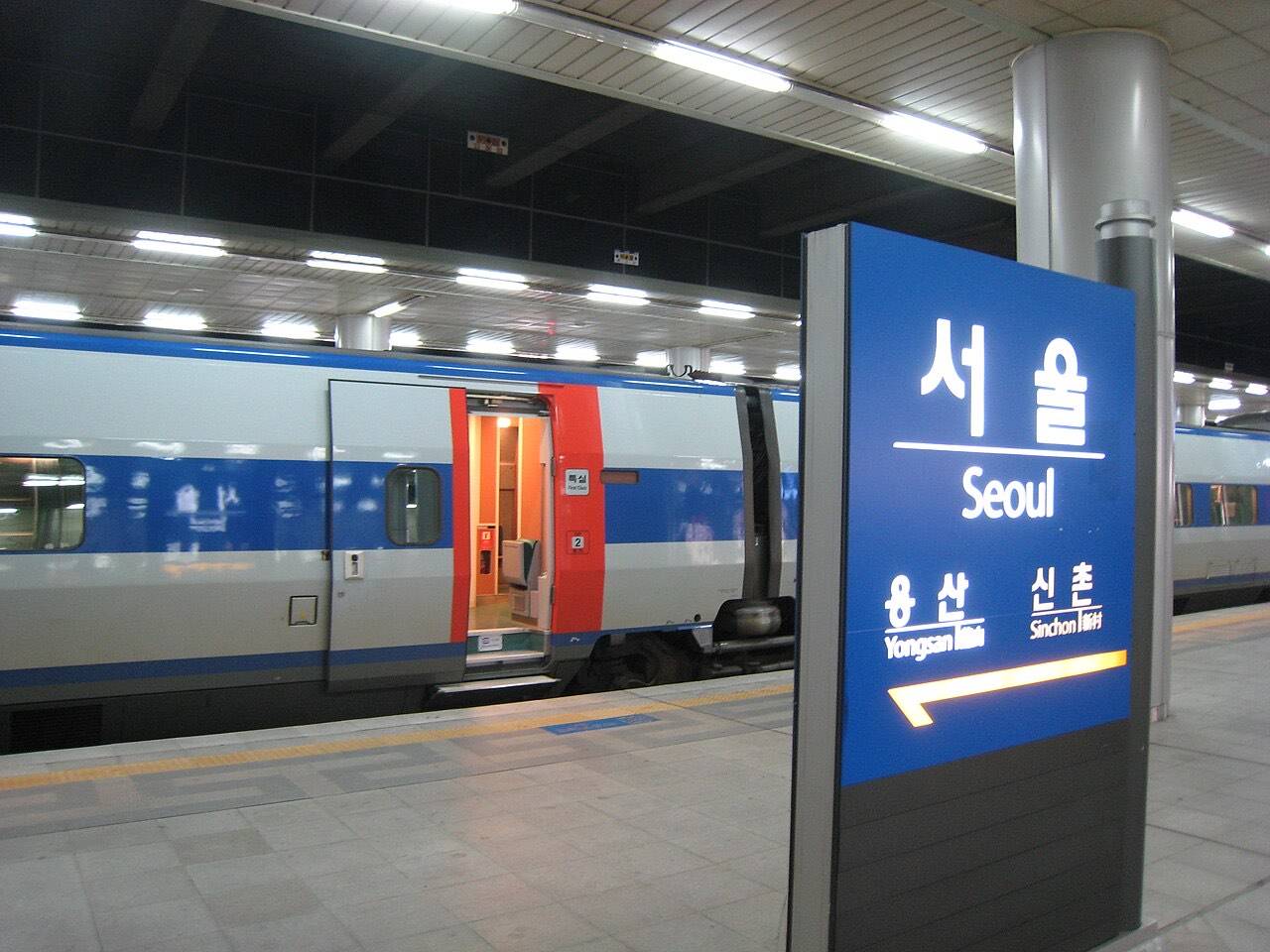
Korea's intercity trains are excellent. The KTX (and the separate SRT) are high-speed lines linking Seoul with Busan, and much of the country, at up to ~300 km/h. Seoul to Busan takes around two and a half hours. Slower ITX and Mugunghwa trains cover smaller towns for less.
If you're doing several long train legs in a short time, look at whether the KR Pass pays off (see our KR Pass guide); for a single round trip, individual tickets are usually cheaper. Booking KTX as a foreigner is straightforward — our KTX guide walks through it.
City transit: subway, buses and the transit card
Within cities, the subway is clean, cheap and signed in English, and it reaches most of what you'll want in Seoul and Busan. Buses fill the gaps.
The key is a transit card — T-money or Cashbee — which you buy for a couple of thousand won at any convenience store and load with cash. Tap in (and out) on subways and buses, and it also works for many taxis and even convenience-store purchases. It saves you fumbling for single fares and gives small transfer discounts.
Taxis: use Kakao T
Taxis are inexpensive and everywhere, and the easy way to use them is the Kakao T app, which works much like Uber: set your destination in the app (no need to explain it in Korean), and it hails a nearby cab. You can pay in the app or with your T-money card or cash. Regular street taxis are fine too, but the app removes the language barrier.
The combination that makes Korea effortless: Naver Map for directions, a T-money card for transit, and Kakao T for taxis. Set up those three and you'll rarely be stuck.
Intercity buses for the places trains miss
Not everywhere has a train. Express and intercity buses are comfortable, frequent and cheap, and they're how you reach spots like Sokcho on the east coast (no direct KTX yet — see our Sokcho & Seoraksan guide). Book ahead for peak weekends and holidays.
Paying for all of it
Cards work almost everywhere in Korea, but keep a little cash for markets, street stalls and older restaurants. For the full breakdown of cards, cash and T-money, see our how to pay in Korea guide.
How to do it
- Before you fly: download Naver Map (or Kakao Map), Kakao T and Papago.
- On arrival: activate your eSIM or grab a SIM, then buy a T-money card at any convenience store.
- Between cities: KTX/SRT where they run, express bus where they don't.
- In the city: subway and buses with T-money, Kakao T for door-to-door.
All of this runs on data, so the first step is getting online the moment you land.
Sort the apps and the transit card, and Korea becomes one of the easiest countries anywhere to travel independently. The trains are fast, the cities are wired, and you'll almost never need to speak a word to get where you're going.