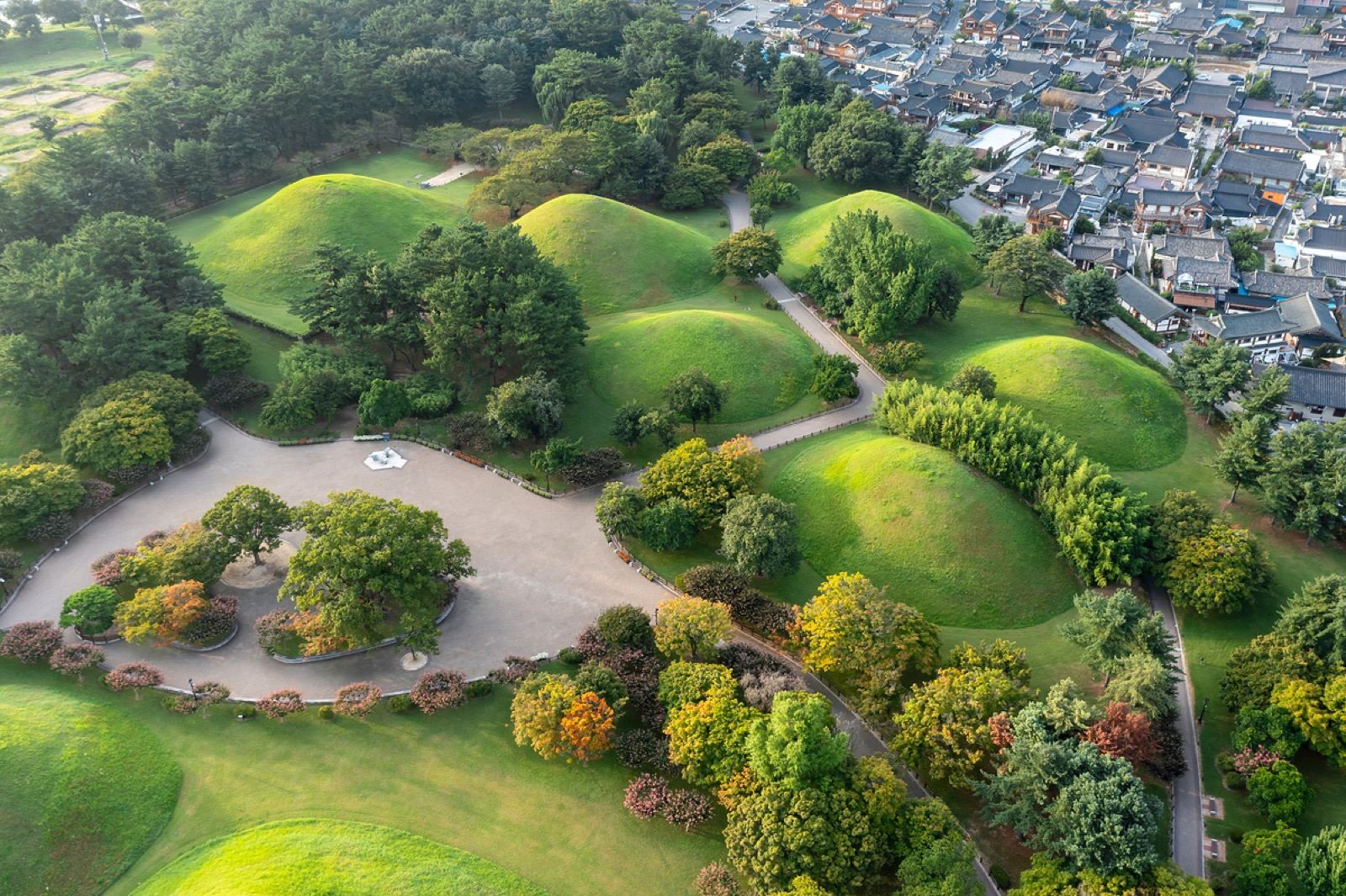
Gyeongju was the capital of the Silla kingdom for nearly a thousand years and is often called "the museum without walls" — grassy royal tombs, an ancient observatory, and UNESCO temples sit out in the open across the city. It's a 30-minute KTX hop from Busan, ideal as a 1–2 day trip. Don't miss Bulguksa Temple, Seokguram Grotto, the Daereungwon tombs, and Donggung Palace & Wolji Pond lit up at night. Go in early April for cherry blossoms, and base yourself near Hwangnidan-gil.
Gyeongju was the capital of the Silla kingdom for nearly a thousand years, and the city still wears that history in the open. Grassy royal tombs swell up between ordinary streets, an ancient stone observatory stands alone in a field, and UNESCO World Heritage temples sit in the hills above town. It's an easy 30-minute KTX hop from Busan, which makes Gyeongju the obvious side trip on any southern itinerary — and one of the most rewarding history destinations in Korea. This guide covers what to see, what to eat, how to get around, where to stay, and when to go.
What to see and do in Gyeongju
Bulguksa Temple & Seokguram Grotto
The two UNESCO masterpieces in the hills east of town are the headline sights. Bulguksa is one of Korea's most beautiful temples, famous for its stone terraces and twin pagodas; the Seokguram Grotto above it houses a serene seated Buddha carved in granite, facing the East Sea. Pair them in one morning — the grotto is a short bus or taxi ride above the temple. Arrive early to beat the tour buses.
Daereungwon Tomb Complex
A park of giant grassy royal mounds you walk among, right in the city center. The Cheonmachong tomb is opened up so you can step inside and see how a Silla king was buried, gold crown and all. At dawn or dusk the low light on the mounds is magical.
Cheomseongdae & the open-field core
Cheomseongdae is the oldest surviving astronomical observatory in East Asia — a bottle-shaped stone tower standing alone in an open field, ringed by flowers in spring. The flat area around it, taking in the tombs, the fields and Woljeonggyo Bridge, is the walkable, bike-able heart of Gyeongju.
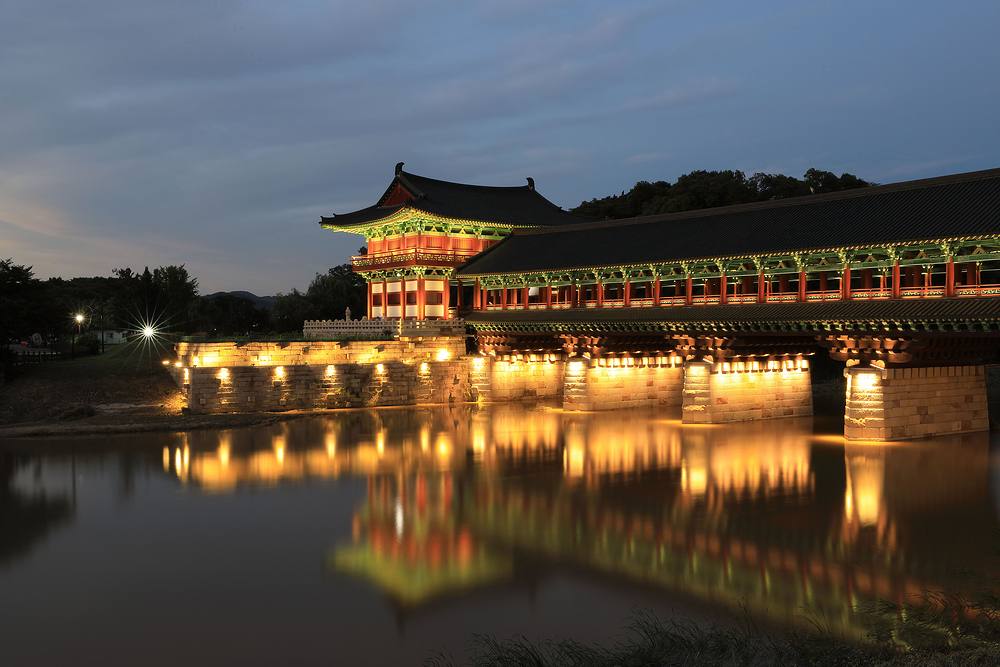
Donggung Palace & Wolji Pond
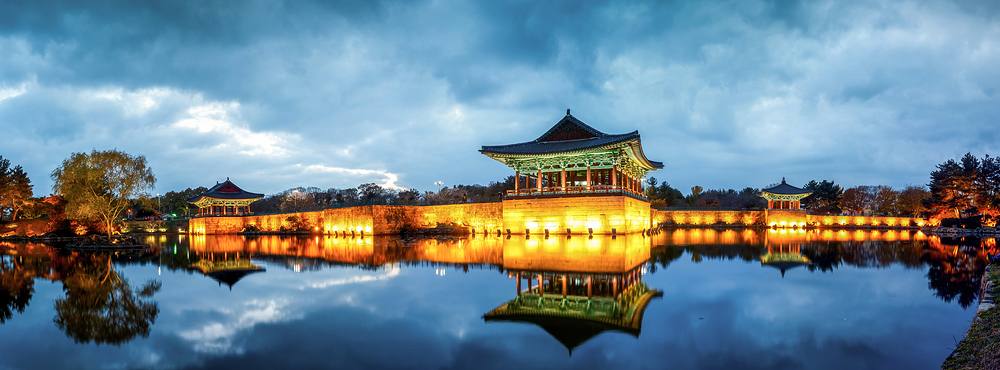
Gyeongju's signature night view: reconstructed Silla pavilions mirrored in a still pond, floodlit after dark. Go in the evening — it's the one sight you should deliberately save for night.
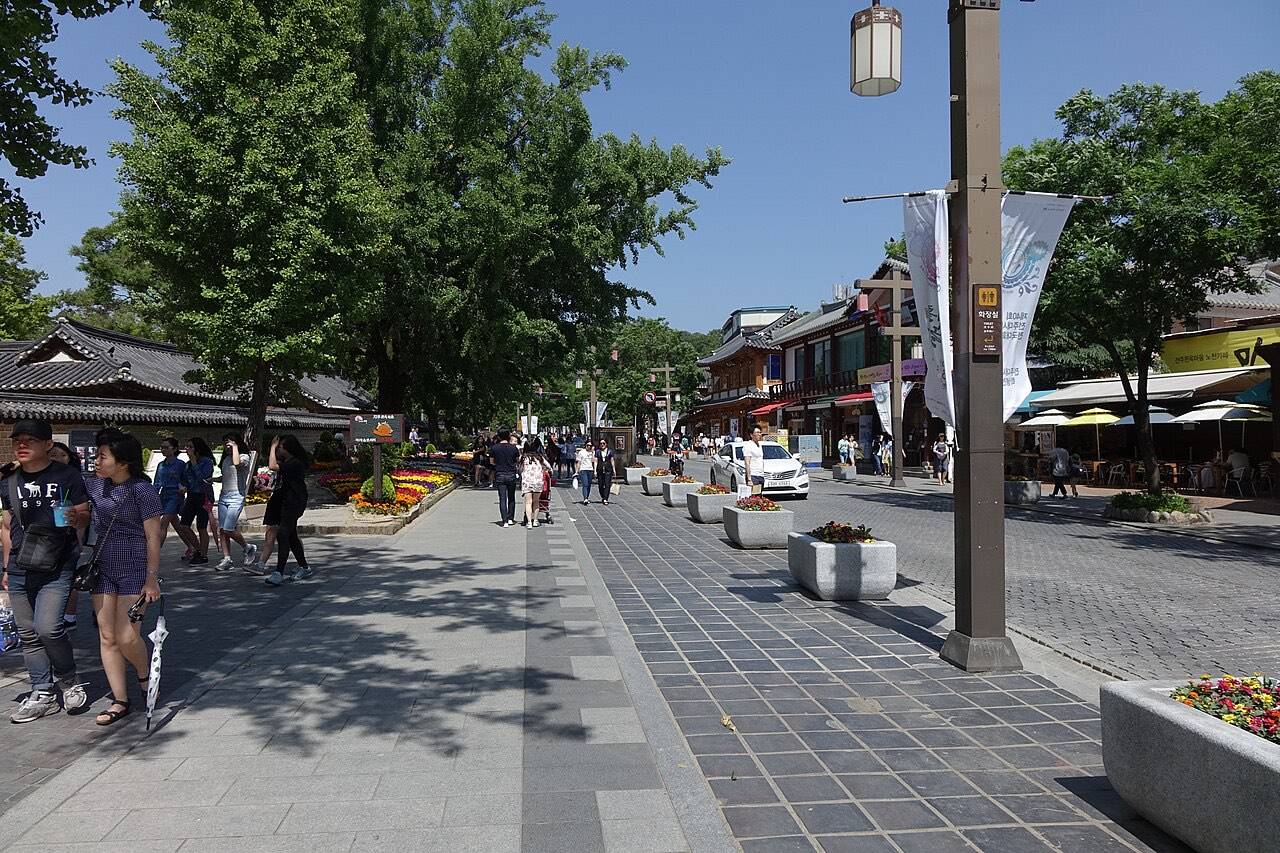
Woljeonggyo Bridge & Hwangnidan-gil
The reconstructed Woljeonggyo is a grand wooden bridge, handsome by day and lit at night. Nearby, Hwangnidan-gil is a hanok lane packed with dessert cafés, boutiques and hanbok-rental shops — the trendy, Instagram-friendly side of the old capital.
The main sights at a glance
| Sight | What it is | Best time |
|---|---|---|
| Bulguksa & Seokguram | UNESCO temple + grotto Buddha | Early morning |
| Daereungwon tombs | Walkable royal burial mounds | Dawn or dusk |
| Cheomseongdae | Ancient stone observatory | Spring (blossoms) |
| Wolji Pond | Floodlit palace reflection | After dark |
| Hwangnidan-gil | Hanok café & hanbok street | Afternoon / evening |
What to eat
The local sweet is Gyeongju bread (hwangnam-ppang), a thin pastry stuffed with red-bean paste, best eaten warm — you'll see the famous shops near the tombs. For a full meal, ssambap sets you up with rice and dozens of wraps and side dishes, a Gyeongju specialty. Wash it down with beopju, the region's traditional rice wine. Hwangnidan-gil is the place for coffee and dessert between sights.
How to get to Gyeongju
- From Busan (easiest): the KTX reaches Singyeongju Station in about 30 minutes, or intercity buses run to the downtown terminal. This is the classic pairing — see our Busan & Gyeongju 5-day itinerary.
- From Seoul: the KTX takes roughly 2 hours to Singyeongju. See KTX for foreigners.
- Singyeongju Station is about 15 minutes from the center by bus or taxi — the station sits outside town, so factor that in.
Getting around
The sights split into two clusters: the flat central core (tombs, Cheomseongdae, Wolji, Hwangnidan-gil), easily covered on foot or by rental bike, and the hill temples (Bulguksa, Seokguram), which need a bus or a day-hire taxi. A rented bike for the core plus one bus or taxi trip to Bulguksa covers almost everything in a day.
Where to stay
Base yourself near Hwangnidan-gil and the tomb park to be walking distance from the central sights and the evening café scene. Options range from hanok guesthouses (a lovely way to do Gyeongju) to standard hotels near the bus terminal. Staying central also lets you catch the tombs at dawn and Wolji at night without transport.
When to go
- Early April is the standout, when cherry blossoms fill the tomb park and the reservoir — one of Korea's best blossom spots.
- Autumn (Oct–Nov) is crisp, clear and nearly as good, with foliage around the temples.
- Summer is hot and humid; start early and rest midday.
- Winter is quiet and cold but crowd-free, good for the temples.
How to do it
- Come from Busan as a day trip or, better, a 1-night stay.
- Morning: Bulguksa and Seokguram in the hills before the crowds.
- Afternoon: bike the central core — tombs, Cheomseongdae, Woljeonggyo — then coffee on Hwangnidan-gil.
- Evening: Wolji Pond floodlit after dark.
- Book ahead for cherry-blossom season and autumn weekends.
Book a Gyeongju & Bulguksa day tour
Frequently asked questions
Is Gyeongju worth visiting?
Yes — Gyeongju is one of Korea's most rewarding history destinations, with UNESCO temples, walkable royal tombs, and an ancient observatory spread across an open city often called "the museum without walls." It's an easy, high-value side trip from Busan.
How do you get to Gyeongju from Busan?
Take the KTX to Singyeongju Station in about 30 minutes, or an intercity bus to the downtown terminal. Singyeongju Station is about 15 minutes from the center by bus or taxi, so allow for that last leg.
How many days do you need in Gyeongju?
One to two days. A single full day covers Bulguksa, Seokguram, the central tombs and Wolji Pond if you move efficiently; an overnight lets you catch the tombs at dawn and the pond at night without rushing.
What are the must-see sights in Gyeongju?
Bulguksa Temple and the Seokguram Grotto, the Daereungwon royal tombs, the Cheomseongdae observatory, and Donggung Palace & Wolji Pond after dark. The Hwangnidan-gil café street rounds out a day.
When is the best time to visit Gyeongju?
Early April for cherry blossoms around the tombs and reservoir is the highlight, and autumn (October–November) is crisp, clear and nearly as scenic. Avoid high summer, which is hot and humid.
Can you visit Gyeongju as a day trip?
Yes, it's a popular day trip from Busan (about 30 minutes each way). But an overnight is better if you want to see the tombs in dawn light and Wolji Pond floodlit at night, which bookend the day beautifully.
How do you get around Gyeongju?
Rent a bike for the flat central core (tombs, Cheomseongdae, Wolji Pond) and use a local bus or day-hire taxi to reach the hill temples of Bulguksa and Seokguram. The center is also very walkable.
Line up the tombs at sunset and Wolji Pond after dark in one evening. The low light on the mounds is the best you'll get, and the crowds have mostly gone home by then.