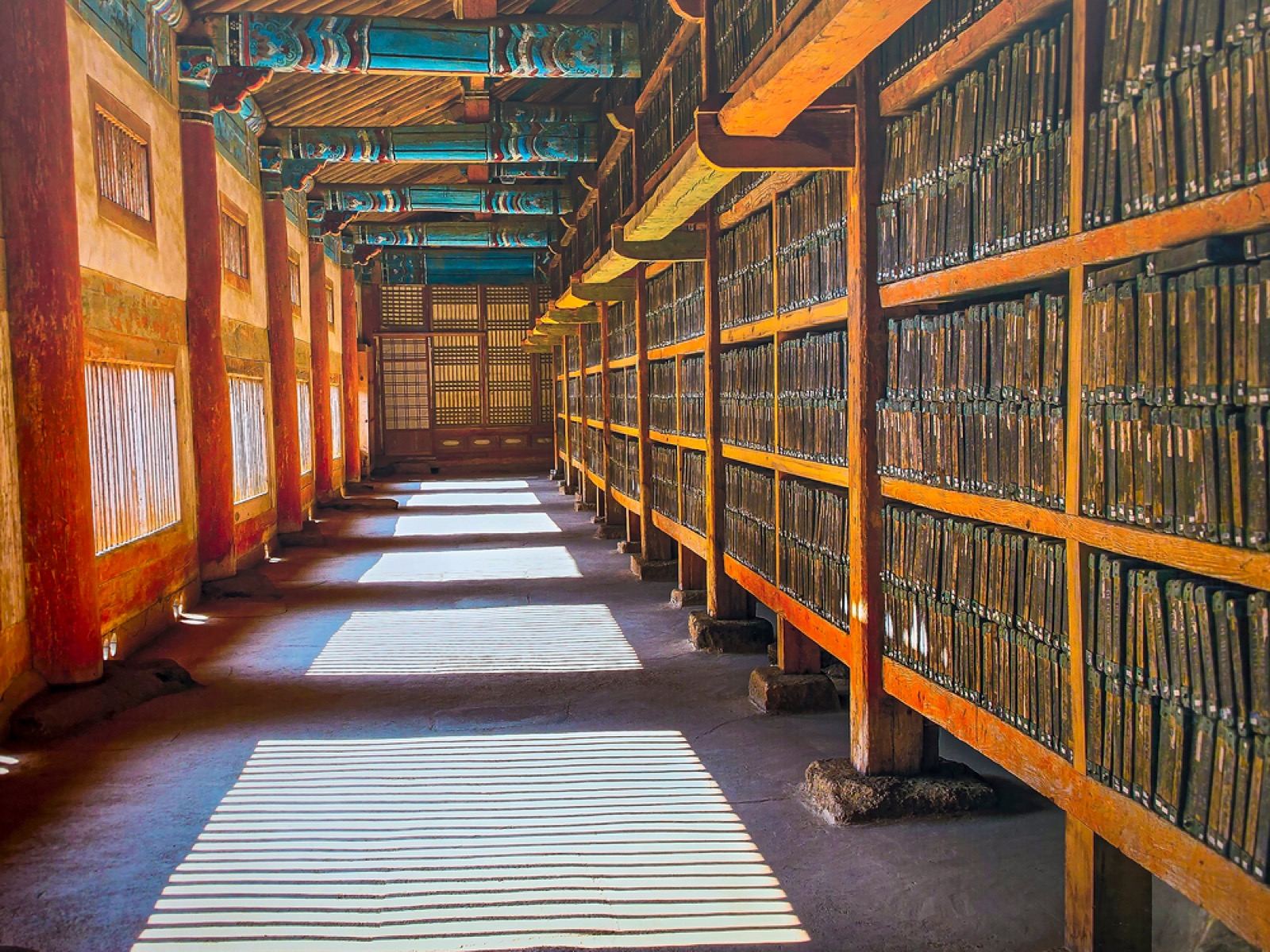
Haeinsa, a mountain temple in Hapcheon County (South Gyeongsang), is one of Korea's three great temples and a UNESCO World Heritage site — home to the Tripitaka Koreana, 80,000 13th-century woodblocks of the Buddhist canon stored in the ingeniously ventilated Janggyeong Panjeon halls. Pair it with a hike or the Hongnyudong valley walk in Gayasan National Park, the Hapcheon Image Theme Park film set, and Hapcheon Lake. There's no train to Hapcheon; come by bus via Daegu. Autumn foliage is the peak season.
Haeinsa is one of Korea's most important temples, and Hapcheon County around it is an uncovered pocket of mountains, a famous film set and a quiet lake. Haeinsa holds the Tripitaka Koreana — the complete Buddhist canon carved onto more than 80,000 wooden printing blocks in the 13th century — and the temple, the woodblocks and their storage halls are all UNESCO-listed. This guide covers the temple, the national park it sits in, and what else is worth the trip to a county most foreign visitors never reach.
Haeinsa Temple and the Tripitaka Koreana
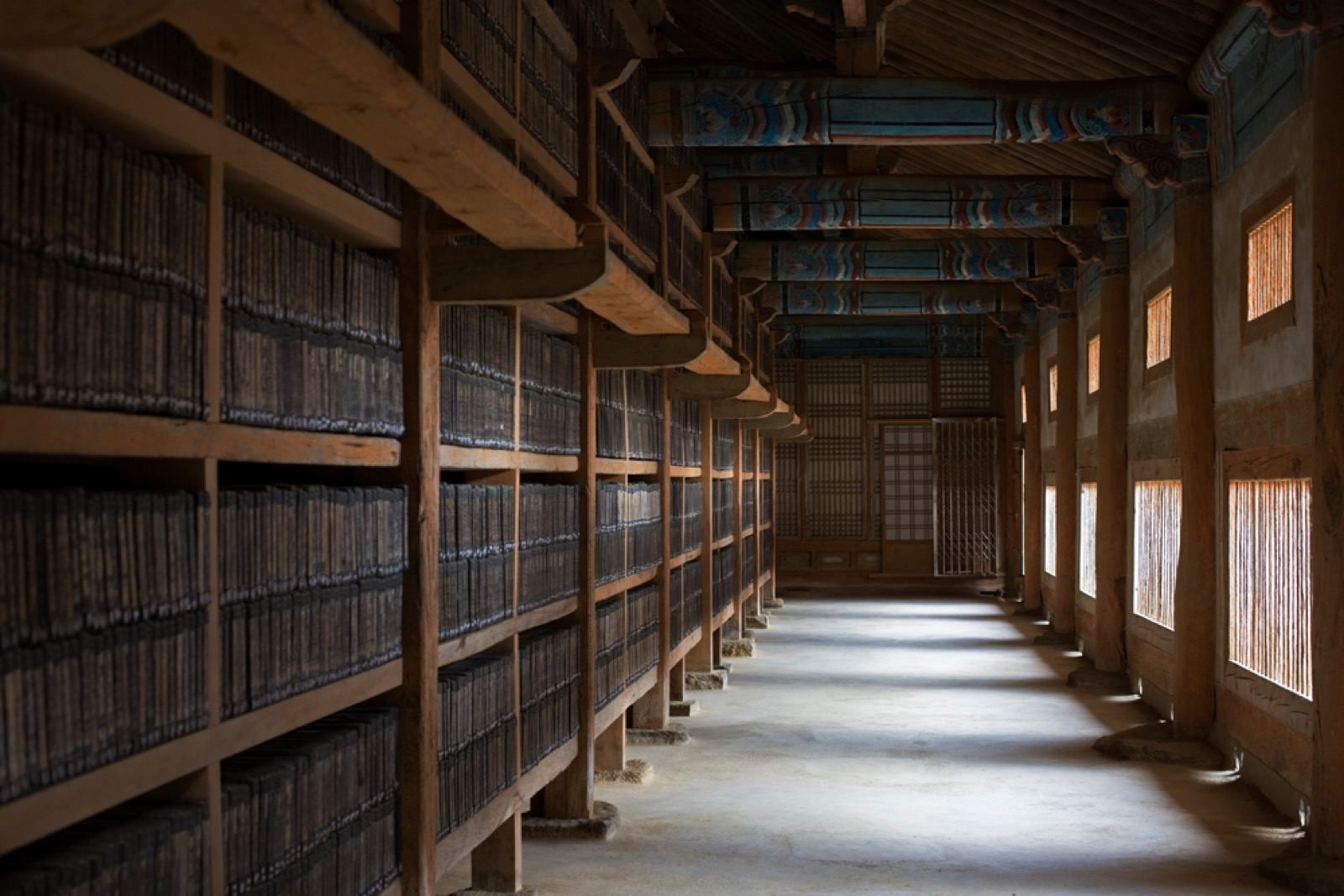
Founded in 802, Haeinsa climbs a wooded hillside in a series of courtyards. The highlight sits at the top: the Janggyeong Panjeon, two long wooden depository halls built to store the Tripitaka Koreana. The halls are a feat of pre-modern engineering — their lattice windows, clay floors and orientation create natural ventilation that has kept the woodblocks dry and pest-free for centuries. You can't handle the blocks, but you can see the halls and peer through the lattices.
- The Tripitaka Koreana (Palman Daejanggyeong) is the world's most complete surviving Buddhist canon in woodblock form, and the reason Haeinsa is on the UNESCO list.
- The walk in through Hongnyudong Valley, along a stream past old trees, is part of the experience — don't rush straight to the parking lot.
- Haeinsa runs a well-regarded templestay if you want to go deeper; see our templestay guide and temple food.
Gayasan National Park
Haeinsa sits inside Gayasan National Park, a granite massif straddling the Gyeongbuk–Gyeongnam border. Options range from an easy valley stroll to a full ridge hike:
- Hongnyudong Valley — the easy, beautiful streamside walk to the temple, spectacular in autumn.
- Sangwangbong / Chilbulbong — the main peaks (around 1,430m), a proper half-day climb rewarded with granite-ridge views.
- Autumn foliage here is some of the best inland; late October into early November is peak.
The sights at a glance
| Sight | What it is | Best for |
|---|---|---|
| Haeinsa & Janggyeong Panjeon | UNESCO temple + Tripitaka Koreana | History, culture |
| Hongnyudong Valley | Streamside walk to the temple | Easy scenery, autumn |
| Gayasan peaks | Granite ridge hike | Hikers |
| Hapcheon Image Theme Park | Joseon/colonial-era film set | K-drama fans, photos |
| Hapcheon Lake | Reservoir with lakeside roads | A quiet drive |
Hapcheon Image Theme Park
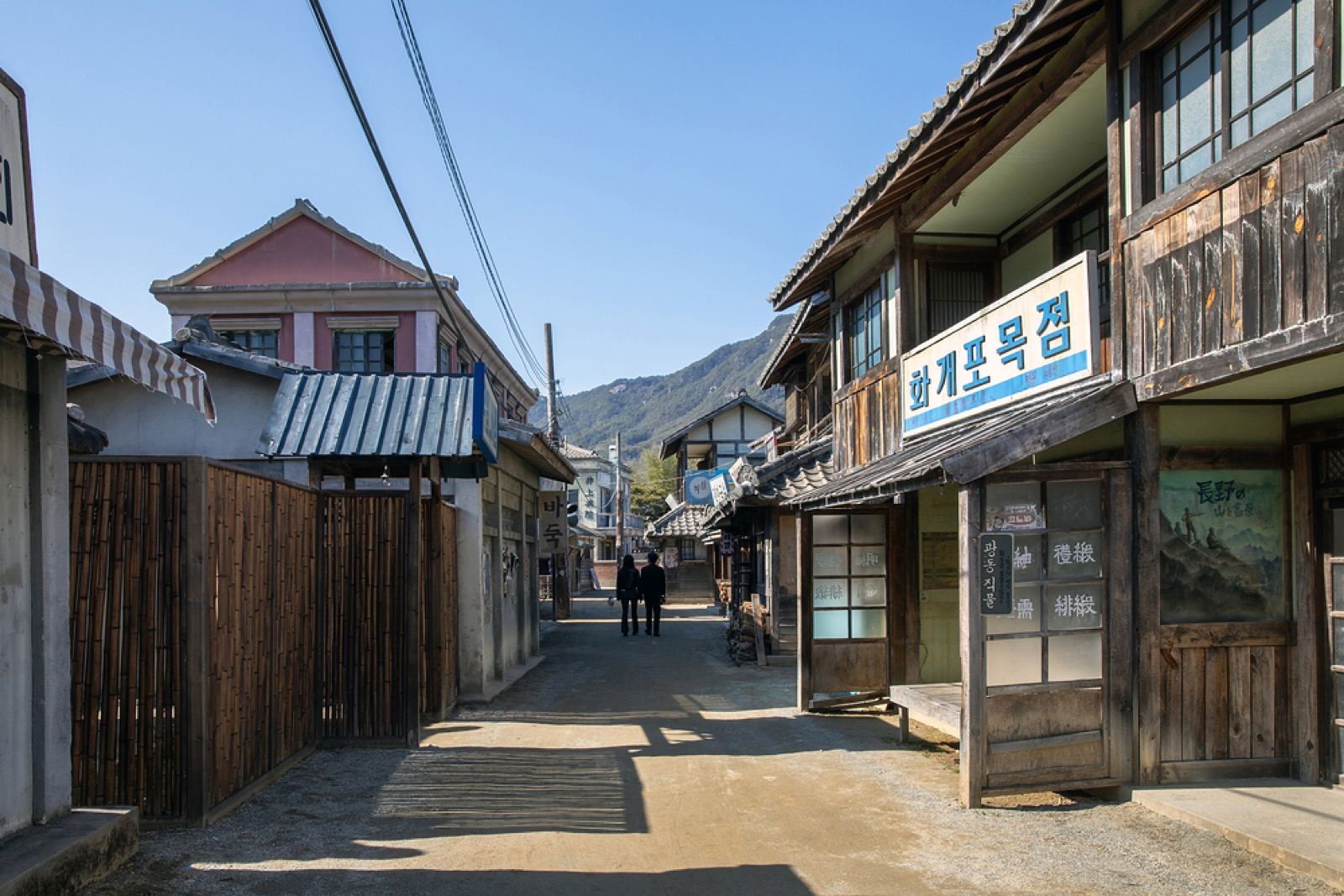
A complete change of pace from the temple: the Hapcheon Image Theme Park is one of Korea's biggest open-air film sets, a reconstructed early-20th-century street of shopfronts, trams and period buildings used for countless K-dramas and movies. It's fun to wander whether or not you recognize the shows, and it photographs beautifully.
Hapcheon Lake
Hapcheon Lake (Hapcheonho) is a large reservoir ringed by quiet roads and a cherry-and-foliage-lined lakeside route that's popular for a slow drive or cycle. It rounds out a trip with some calm water scenery between the temple and the film set.
What to eat
Mountain-temple country means sanchae bibimbap (wild-greens rice) and sanchae jeongsik (a spread of mountain-vegetable side dishes) near Haeinsa. Hapcheon is also known for hanu (Korean beef) — look for Hapcheon hanu restaurants — and for freshwater fish dishes near the lake.
How to get to Hapcheon and Haeinsa
- There's no train to Hapcheon. The usual route is the KTX to Daegu (Dongdaegu), then an intercity bus to Haeinsa (about 1–1.5 hours) from Daegu's Seobu bus terminal.
- Direct buses also run from Seoul (Seoul Nambu) to Haeinsa, taking around 4 hours.
- A rental car makes linking Haeinsa, the film set and the lake much easier, as they're spread across the county.
- See getting around Korea for the wider transport picture.
How to do it
- Route via Daegu by KTX, then bus to Haeinsa (or drive).
- Walk in through Hongnyudong Valley to the temple and the Janggyeong Panjeon.
- Add a Gayasan hike or keep it easy with the valley walk.
- Drive to the film set and Hapcheon Lake if you have a car and time.
- Come in autumn for peak foliage, or consider a Haeinsa templestay.
Find temple stays & experiences across Korea
Frequently asked questions
What is Haeinsa Temple famous for?
Haeinsa is famous for the Tripitaka Koreana — the complete Buddhist canon carved onto over 80,000 wooden woodblocks in the 13th century — and for the Janggyeong Panjeon halls that have preserved them for centuries. The temple, the blocks and the halls are all UNESCO World Heritage listed.
What is the Tripitaka Koreana?
The Tripitaka Koreana (Palman Daejanggyeong) is the world's most complete surviving Buddhist canon in woodblock form, carved in the 1200s. The 80,000-plus blocks are stored at Haeinsa in the specially ventilated Janggyeong Panjeon depository, which keeps them dry and intact.
How do you get to Haeinsa Temple?
There's no train to Hapcheon. Take the KTX to Dongdaegu (Daegu), then an intercity bus to Haeinsa, about 1–1.5 hours. Direct buses also run from Seoul Nambu terminal in around 4 hours. A rental car helps for the county's other sights.
Is Haeinsa worth visiting?
Yes — it's one of Korea's three great temples and a UNESCO site, set in the forests of Gayasan National Park. Beyond the temple, Hapcheon has a big K-drama film set, a scenic lake, and excellent autumn foliage, making it a rewarding trip off the usual route.
Can you do a templestay at Haeinsa?
Yes, Haeinsa runs a well-regarded templestay program where you join temple life — meditation, chanting and temple food — overnight. It's one of the more atmospheric temples to try it, given its mountain setting and UNESCO status.
When is the best time to visit Haeinsa and Gayasan?
Autumn (late October to early November) is the highlight, when Gayasan and the Hongnyudong valley blaze with foliage. Spring and early summer are green and quiet, and winter is stark but serene.
What else is there to do in Hapcheon?
Visit the Hapcheon Image Theme Park, one of Korea's biggest open-air film sets recreating an old Korean street, and take a drive around Hapcheon Lake. Both pair well with Haeinsa for a fuller day or overnight.
Come for the temple and the woodblocks, give Gayasan a walk, and tack on the film set or the lake. Hapcheon rewards the extra effort it takes to reach it.