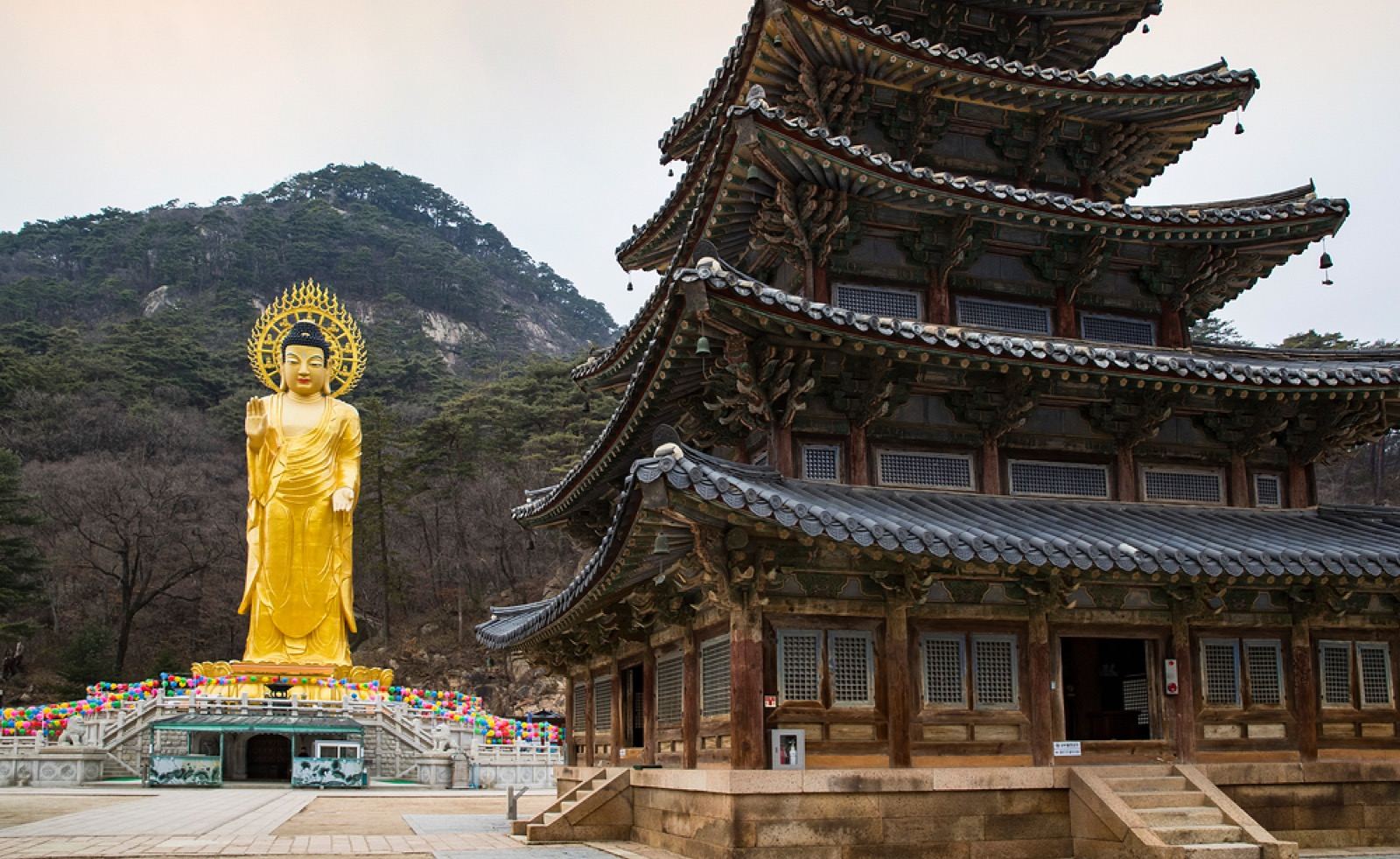
Songnisan National Park, in Boeun County (North Chungcheong), centers on Beopjusa — a historic temple with a 33-metre golden bronze Maitreya Buddha and Palsangjeon, Korea's only surviving five-storey wooden pagoda. Hike the Munjangdae ridge for panoramic views, walk the pine-and-oak approach forest (spectacular in autumn), and eat jujube (daechu) dishes that Boeun is famous for. There's no train to Boeun; come by bus via Cheongju or Daejeon. Autumn foliage is the peak season.
Songnisan National Park is one of inland Korea's great temple-and-mountain days, and almost no foreign visitors make it. The park, in Boeun County in Chungcheongbuk-do, pairs the historic Beopjusa temple with granite ridges, a famous foliage-lined approach forest, and the jujube orchards the county is known for. This guide covers the temple, the hikes, what to eat, and how to reach a park off the usual trail.
Beopjusa Temple
Beopjusa, founded in 553, is the heart of Songnisan and holds two standout sights:
- The Golden Maitreya Buddha — a towering 33-metre gilt-bronze statue, one of the largest Buddha statues in the country and impossible to miss.
- Palsangjeon — a five-storey wooden pagoda, the only surviving wooden pagoda in Korea, with paintings depicting the life of the Buddha inside. It's a national treasure and the temple's architectural jewel.
The temple grounds also hold ancient stone lanterns and a giant iron cauldron, and the setting under the Songnisan ridges is serene. Beopjusa runs a templestay too — see our templestay guide and temple food.
The approach forest and hikes
Part of Songnisan's appeal is the approach: a wide, mostly flat forest path of old pines and oaks leading to Beopjusa, gorgeous in autumn when the leaves turn. Beyond the temple, the trails climb:
- Munjangdae — the park's signature ridge hike to a dramatic rocky viewpoint (around 1,033m), a proper half-day climb with ladders and stairs near the top and big panoramas as the reward.
- Sejokdae / shorter loops — gentler options if you'd rather not summit.
- Autumn (mid-to-late October) is the headline season; the foliage here is among inland Korea's best.
At a glance
| Sight | What it is | Best for |
|---|---|---|
| Beopjusa | Temple, giant Buddha, wooden pagoda | History, culture |
| Approach forest | Pine-and-oak path to the temple | Easy walking, autumn |
| Munjangdae | Rocky ridge viewpoint hike | Hikers |
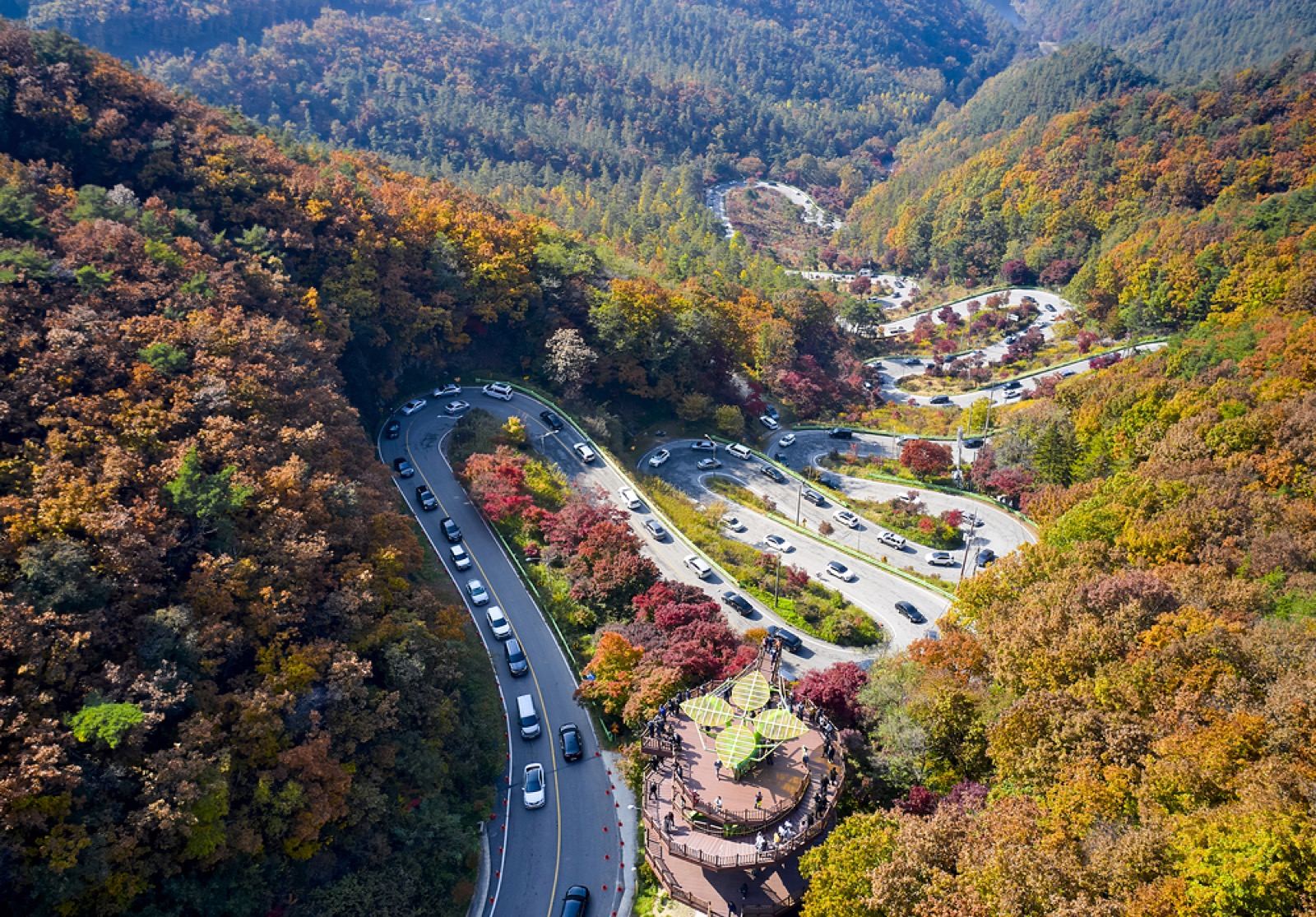
| Malti Pass (Maltijae) | Switchback mountain road & lookout | A scenic drive |
| Jujube (daechu) food | Boeun's signature crop | Foodies, souvenirs |
What to eat
Boeun is jujube (daechu) country, so look for jujube tea, jujube-infused dishes and the autumn harvest at roadside stands and markets. Near the park, sanchae bibimbap (wild-greens rice) and sanchae jeongsik (mountain-vegetable spreads) are the classic temple-town meal, along with pajeon (savory pancake) and makgeolli after a hike.
How to get to Songnisan and Beopjusa
- There's no train to Boeun. The usual route is the KTX to Cheongju (Osong) or Daejeon, then an intercity bus to Songnisan / Beopjusa (roughly 1–1.5 hours). Buses also run from Cheongju and Daejeon terminals.
- Direct buses run from Seoul (Dong Seoul / Nambu) to Songnisan, taking around 3 hours.
- A rental car makes the trip easier and opens up the scenic mountain roads around the park.
- See getting around Korea for the wider picture, and nearby Danyang for another Chungbuk mountain stop.
How to do it
- Route via Cheongju or Daejeon by KTX, then bus to Songnisan (or drive).
- Walk the forest approach to Beopjusa and see the giant Buddha and wooden pagoda.
- Hike Munjangdae for the ridge views, or keep it gentle near the temple.
- Eat sanchae bibimbap, and pick up jujube products from Boeun.
- Come in mid-to-late October for peak foliage, or try a Beopjusa templestay.
Find temple stays & nature experiences in Korea
Frequently asked questions
What is Beopjusa Temple famous for?
Beopjusa, in Songnisan National Park, is famous for its 33-metre golden bronze Maitreya Buddha — one of Korea's largest Buddha statues — and for Palsangjeon, the only surviving wooden pagoda in Korea. Both are major draws, set under the Songnisan ridges.
Is Songnisan National Park worth visiting?
Yes, especially for a temple-and-mountain day. Songnisan pairs the historic Beopjusa temple with a beautiful forest approach, the Munjangdae ridge hike, and some of inland Korea's best autumn foliage, all with few foreign visitors.
How do you get to Songnisan and Beopjusa?
There's no train to Boeun. Take the KTX to Cheongju (Osong) or Daejeon, then an intercity bus to Songnisan/Beopjusa, about 1–1.5 hours. Direct buses from Seoul take around 3 hours. A rental car helps for the scenic roads.
How hard is the Munjangdae hike?
It's a moderate half-day climb to a rocky ridge viewpoint at about 1,033m, with stairs and ladders near the top. The payoff is a wide panorama. Gentler trails and the flat forest approach to the temple are options if you'd rather not summit.
When is the best time to visit Songnisan?
Mid-to-late October for peak autumn foliage, when the forest approach and ridges turn color — it's the headline season. Spring and summer are green and quieter, and winter is stark but serene.
What should you eat near Songnisan?
Boeun is jujube (daechu) country, so try jujube tea and dishes and buy some at roadside stands. Near the park, the classic meals are sanchae bibimbap (wild-greens rice) and sanchae jeongsik mountain-vegetable spreads, with pajeon and makgeolli after a hike.
Can you do a templestay at Beopjusa?
Yes, Beopjusa offers a templestay program where you join temple life overnight — meditation, chanting and temple food — in its historic, mountain setting. It's a quieter, less touristy option than the big-name temples.
Come for the giant Buddha and the only wooden pagoda in Korea, walk the forest in, and hike Munjangdae if your legs are willing. Songnisan is inland Korea at its most peaceful.